The Water Quality of Los Haitises National Park: Freshwater Chemistry, Limestone Influence and Wetland Health
Introduction
Water is one of the most important parts of the natural environment of Los Haitises National Park. It supports wetlands, mangrove forests, rivers, underground drainage systems and many forms of wildlife. Although visitors often notice the park's green landscapes and coastal waterways, the chemical condition of its water is another important part of its ecological story.
Water quality describes the physical, chemical and biological characteristics of water. It includes factors such as temperature, acidity, dissolved minerals, electrical conductivity, nutrients, suspended particles and microorganisms.
In Los Haitises, water quality is influenced by the region's limestone geology, rainfall, groundwater movement, surface drainage and connections between wetlands and underground aquifers.
Scientific research has examined water from rivers, springs and groundwater sources in the wider Los Haitises region. One study published in 2013 reported broadly similar chemical characteristics among the water bodies it sampled, while also identifying differences in their isotopic composition that helped researchers understand evaporation and groundwater connections.
This guide explains what influences water quality in Los Haitises, how scientists measure it and why protecting freshwater environments is essential for the park's long-term conservation.
1. What Does Water Quality Mean?
Water quality refers to the condition of water in relation to its natural environment and intended use.
Water can look clear but still contain dissolved substances or microorganisms that cannot be seen without testing. Similarly, naturally colored or slightly cloudy water is not automatically polluted.
Scientists evaluate water quality using several groups of indicators.
Physical indicators describe visible or measurable characteristics such as temperature, color, turbidity and suspended particles.
Chemical indicators include pH, electrical conductivity, dissolved minerals, nutrients and other chemical substances.
Biological indicators include microorganisms and the presence or condition of aquatic organisms that can help indicate environmental conditions.
No single measurement can describe the complete quality of a water body. A reliable assessment requires several indicators considered together.
For Los Haitises, this is especially important because rivers, springs, wetlands and groundwater do not necessarily have identical characteristics.
2. How Limestone Influences Water Chemistry
The limestone geology of Los Haitises has a major influence on its water system.
Rainwater absorbs carbon dioxide from the atmosphere and soil. This creates a weakly acidic solution that can gradually dissolve limestone as it moves over or through the rock.
Limestone contains calcium carbonate. When water interacts with carbonate rocks, dissolved calcium and bicarbonate can become important components of its chemical composition.
This helps explain why groundwater in limestone regions often has a calcium-bicarbonate character.
A 2013 study of Los Haitises wetlands described the region's groundwater and spring samples as having chemical characteristics consistent with movement through karst formations. The researchers discussed calcium-bicarbonate water chemistry and the rapid infiltration of water through dissolved rock openings.
This geological influence is natural. It does not mean that all water in the park has exactly the same chemical composition or that limestone automatically makes water safe to drink.
Other factors, including rainfall, evaporation, surface runoff and contact with different geological materials, can also influence water chemistry.
3. The Main Water Environments That Need Monitoring
Los Haitises contains several types of water environments. Each has different characteristics and may require different monitoring methods.
Groundwater
Groundwater moves through soil, limestone fractures, cavities and underground conduits. Its chemical composition is influenced by the rocks and materials with which it comes into contact.
In a karst environment, groundwater can move through relatively large openings, making the system particularly sensitive to certain forms of contamination.
Springs
Springs are natural places where groundwater reaches the surface. Their water can provide information about the underground drainage system.
Researchers can compare spring water with groundwater samples and surface-water samples to investigate possible connections.
Rivers and streams
Surface rivers and streams receive water from rainfall, runoff and, in some places, groundwater discharge.
Their quality can change with rainfall, sediment movement, evaporation and contact with surrounding land.
Wetlands
Wetlands may receive water from rainfall, surface channels and groundwater. Their chemistry can also be influenced by vegetation, sediment and biological processes.
Mangrove channels
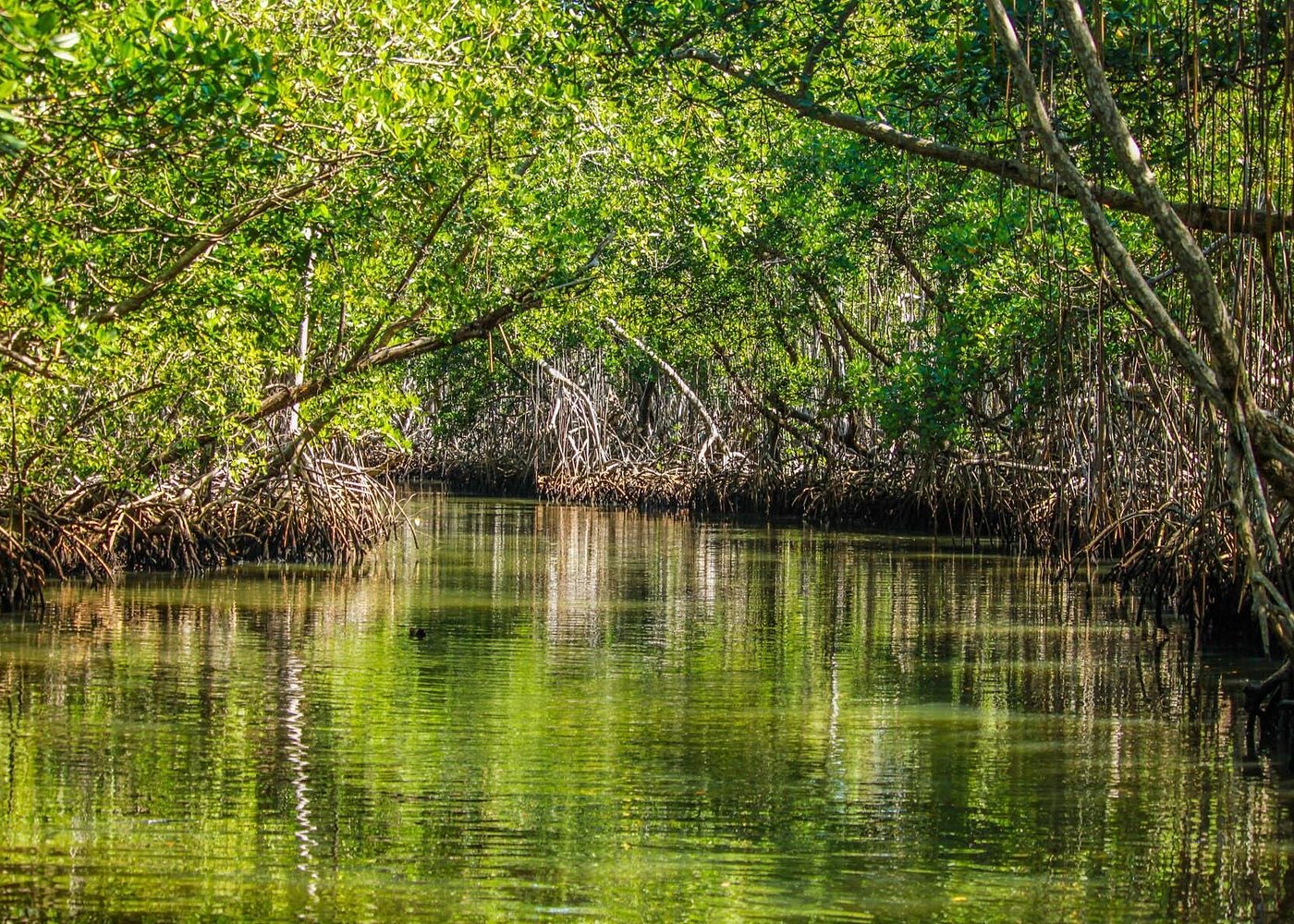
Mangrove waterways are affected by coastal and tidal processes. Their water may be influenced by freshwater inputs, seawater mixing and the movement of sediment and organic material.
These environments should not be treated as interchangeable. A freshwater spring and a tidal mangrove channel naturally have different water conditions.
4. What Is pH and Why Does It Matter?
pH measures how acidic or alkaline water is.
The pH scale generally ranges from 0 to 14:
- Below 7: acidic
- Around 7: neutral
- Above 7: alkaline
Natural water can have different pH values depending on geology, dissolved substances, biological activity and other environmental conditions.
In limestone environments, the interaction between water and carbonate rock can influence pH and the balance of dissolved bicarbonate and carbonate.
However, pH alone cannot establish whether water is clean, polluted or suitable for drinking.
For example, water may have a pH close to neutral while still containing harmful microorganisms or chemical contaminants.
For environmental monitoring in Los Haitises, pH should be considered alongside other chemical and biological measurements.
5. Electrical Conductivity and Dissolved Minerals
Electrical conductivity measures how easily water conducts an electrical current.
Water containing more dissolved ions generally has higher electrical conductivity. These ions may include calcium, magnesium, sodium, potassium, bicarbonate, chloride and sulfate.
Conductivity is useful because it provides a quick indication of the amount of dissolved ionic material in water.
A 2013 study of Los Haitises wetlands reported average conductivity values of:
Water sample categoryAverage conductivity reportedGroundwater359 µS/cmRivers354 µS/cmSprings364 µS/cm
These figures describe the samples examined in that particular research study. They are not current measurements for every river, spring or wetland in the national park.
The relatively similar averages helped researchers describe the sampled water bodies as having broadly comparable chemical characteristics.
Conductivity is useful for identifying changes over time. If repeated measurements at a monitoring location show an unexpected increase or decrease, researchers may investigate possible changes in water sources, mineral content or contamination.
However, conductivity does not identify a specific pollutant. Laboratory analysis is needed to determine which dissolved substances are present.
6. Bicarbonate, Calcium and the Limestone Connection
Bicarbonate is an important component of water chemistry in many limestone regions.
As water moves through carbonate rocks, it can dissolve minerals and acquire calcium and bicarbonate ions.
The 2013 Los Haitises wetlands study reported the following average bicarbonate concentrations:
Water sample categoryAverage bicarbonateGroundwater200 mg/LRivers190 mg/LSprings196 mg/L
The results show similar average bicarbonate concentrations among the sampled water categories.
This is consistent with the influence of carbonate geology across the investigated area.
Calcium is another important ion in limestone-influenced water. Its presence can help researchers understand the interaction between water and carbonate rocks.
However, bicarbonate and calcium values should always be interpreted alongside the full chemical analysis. They do not independently establish whether a water body is polluted or safe for human consumption.
7. Chloride and Sulfate in Freshwater
Chloride and sulfate are two chemical components commonly measured during water-quality investigations.
Chloride may come from natural geological sources, rainfall, seawater influence or human activities. Its concentration can be particularly relevant when studying coastal water environments.
Sulfate may originate from geological materials, atmospheric deposition and other natural or human-related sources.
The 2013 Los Haitises study reported average concentrations of approximately:
ParameterAverage concentration reportedChloride16 mg/LSulfate4 mg/L
These averages describe the water samples included in that study. They should not be interpreted as current values for all park waters or as regulatory limits.
In a coastal national park, researchers need to distinguish naturally occurring mineral content from changes associated with seawater influence or human activities.
Comparing measurements across locations and seasons can help identify unusual patterns that deserve further investigation.
8. How Rainfall and Evaporation Affect Water Quality
Rainfall and evaporation can influence the chemical characteristics of surface water.
When rainfall enters the ground, it can infiltrate soil and limestone openings. It may also flow over the land, collecting sediment and dissolved materials before reaching streams and wetlands.
Evaporation removes water from a surface without removing most dissolved salts and minerals. As water evaporates, the remaining water may become more concentrated.
This process can influence shallow ponds, wetlands and other surface-water environments, especially where water remains exposed to warm conditions.
The 2013 Los Haitises wetlands study used isotope measurements to investigate differences among water sources. The researchers reported that spring samples had isotopic characteristics similar to groundwater, while rivers and shallow dug wells showed greater isotopic enrichment consistent with evaporation.
This finding helps explain why different water bodies can have different characteristics even when they are part of the same wider hydrological system.
It also shows why water-quality assessments should consider hydrological conditions rather than relying on a single sample.
9. Turbidity and Suspended Sediment
Turbidity describes how cloudy or unclear water appears because of suspended particles.
These particles may include:
- Fine soil
- Clay
- Organic matter
- Algae
- Small fragments of plant material
- Other suspended substances
In natural environments, turbidity can increase after heavy rainfall or when water moves across exposed soil.
Sediment can also enter surface-water channels through erosion and runoff.
In mangrove and wetland environments, suspended material is part of natural ecological processes. Mangroves can trap and stabilize sediment, although excessive sediment input may affect water conditions and habitat quality.
Turbidity should not be confused with pollution. Naturally occurring organic matter or sediment can make water cloudy without necessarily indicating chemical contamination.
For this reason, turbidity measurements are most useful when compared with other water-quality indicators and observations of local environmental conditions.
10. Nutrients and Their Role in Wetland Water Quality
Nutrients are chemical substances that support plant and algal growth.
Nitrogen and phosphorus are particularly important in aquatic ecosystems.
Natural nutrient sources include decomposing leaves, animal waste and soil materials. Nutrients also move through water systems during rainfall and surface runoff.
However, excessive nutrient inputs can contribute to rapid algal growth and changes in oxygen conditions.
In wetlands, nutrient cycling is part of the natural ecosystem. Plants absorb nutrients, organic material decomposes and microorganisms help transform chemical compounds.
Scientists may measure substances such as nitrate, ammonium and phosphate to understand nutrient conditions.
The National Geological Service's hydrogeological study of the Los Haitises unit includes chemical analyses of groundwater, including nitrogen-related parameters. Those historical measurements provide useful regional hydrogeological context, but they should not be presented as a current water-quality assessment of every park habitat.
Continued monitoring is important for understanding whether nutrient concentrations are changing over time.
11. Biological Water Quality and Aquatic Life
Water chemistry is only one part of environmental water quality.
Biological conditions also matter because aquatic organisms respond to the environment in which they live.
Scientists may study microorganisms, aquatic invertebrates, algae and other biological indicators to understand the condition of a water body.
For example, some aquatic organisms are sensitive to changes in oxygen, temperature or pollution, while others tolerate a wider range of conditions.
The presence of a particular species does not automatically prove that water is safe or unpolluted. Biological assessments must be based on appropriate sampling methods and ecological knowledge.
In Los Haitises, biological monitoring can complement chemical testing to help researchers understand the health of freshwater and wetland environments.
12. How Scientists Test Water Quality in Los Haitises
Water-quality monitoring requires systematic sampling and laboratory analysis.
The 2013 Los Haitises wetland research provides an example of this approach. Researchers measured water levels in rivers, springs and wells and collected samples for hydrochemical and isotopic analysis.
A broader monitoring programme can include several stages.
Selecting sampling locations
Scientists identify representative locations, such as rivers, springs, wells and wetlands.
Sampling locations should be selected according to the research question and the hydrological connections being investigated.
Collecting water samples
Samples are collected using suitable equipment and procedures to avoid contamination.
The location, date, weather conditions and sampling method should be recorded.
Measuring field parameters
Some properties can be measured directly in the field, including temperature, pH, conductivity and dissolved oxygen.
Laboratory analysis
Samples may be tested for major ions, nutrients, metals, organic contaminants and microorganisms, depending on the monitoring objectives.
Comparing results
Researchers compare measurements across locations and dates. They may also compare results with appropriate environmental standards or reference conditions.
Interpreting the findings
The final assessment considers geology, rainfall, groundwater movement, land use and ecological conditions.
This process is more reliable than judging water quality by appearance alone.
13. Potential Threats to Water Quality
The water system of Los Haitises is part of a connected natural environment. Pollution or disturbance in one area may affect other locations if water moves between them.
Potential threats that water managers should consider include:
Improper waste disposal: Rubbish and discarded materials can affect surface water and surrounding soils.
Chemical contamination: Chemicals entering the ground may reach groundwater through fractures and other openings in karst limestone.
Excessive sediment: Soil erosion and runoff can increase suspended particles in rivers and wetlands.
Nutrient enrichment: Excessive nutrient inputs can change aquatic conditions and encourage unwanted algal growth.
Habitat disturbance: Damage to vegetation can influence runoff, sediment movement and the ecological condition of water environments.
Coastal water influence: In coastal settings, tidal movement and seawater mixing can influence salinity and other water characteristics.
These are potential environmental pressures that require monitoring. They should not be interpreted as proof that every one of these problems is currently occurring at every location in the park.
14. Why Karst Groundwater Is Vulnerable to Pollution
Karst aquifers can be particularly sensitive to contamination.
In some geological environments, water moves slowly through small pores and sediment layers. These materials can sometimes provide opportunities for filtration and other natural attenuation processes.
In karst limestone, however, water may enter larger openings and move through underground conduits.
This can allow some contaminants to travel relatively quickly through the groundwater system.
The Dominican Geological Service describes the Los Haitises limestone aquifer as highly permeable because of its karst development. Its geological assessment also identifies the vulnerability of such aquifers to contamination from the surface.
This is why activities in groundwater recharge areas matter even when they are not immediately beside a spring or wetland.
Protecting the surface landscape helps protect the underground water system.
15. How Water Quality Supports Wetland Conservation
Wetlands depend on suitable water conditions.
Water chemistry, depth, temperature, nutrient availability and sediment conditions can influence wetland vegetation and aquatic organisms.
Changes in water quality may affect the balance of the ecosystem.
For example, excessive sediment can alter shallow-water habitats, while changes in nutrient levels can influence plant and algal growth.
Groundwater inputs may also help maintain wetland water levels in some locations.
The 2013 research on Los Haitises wetlands highlighted the relationship between groundwater and wetland environments. Its findings support the importance of considering underground water when planning wetland management.
Conservation should therefore consider water quality and water movement together. Protecting wetlands means protecting the water sources and surrounding land that help maintain them.
16. What Visitors Can Do to Protect Water Quality
Visitors can help reduce unnecessary pressure on the park's water environments through responsible behavior.
- Take rubbish away and use designated waste facilities.
- Never throw plastic, food packaging or other waste into waterways.
- Do not pour soaps, oils, fuels or chemicals into natural water.
- Follow authorized routes and guide instructions.
- Avoid damaging wetland vegetation and mangrove roots.
- Do not disturb wildlife around rivers, springs and wetlands.
- Respect restrictions around caves, water sources and sensitive habitats.
Even small actions matter when many people visit a protected natural area.
The goal is to enjoy the park without introducing waste or disturbing the natural processes that sustain it.
Conclusion
Water quality in Los Haitises National Park is shaped by a combination of limestone geology, groundwater movement, rainfall, evaporation, surface runoff and wetland processes.
Scientific studies have shown that groundwater, rivers and springs in the wider region share some chemical characteristics. Research has also demonstrated how isotope measurements can help explain differences between water sources and identify the influence of evaporation.
The region's karst geology makes groundwater particularly important, but it also creates potential vulnerability because water can move through fractures and larger underground openings.
Understanding water quality requires more than looking at whether water appears clear. Scientists use physical, chemical and biological measurements to evaluate its condition and identify changes that may affect the ecosystem.
Protecting the water of Los Haitises means protecting its rivers, springs, wetlands, groundwater pathways and surrounding natural habitats as parts of one connected environment.
Frequently Asked Questions
1. What affects water quality in Los Haitises National Park?
Water quality is influenced by limestone geology, rainfall, groundwater movement, evaporation, surface runoff, sediment and biological processes.
2. Does limestone affect the chemistry of water?
Yes. Water interacting with limestone can dissolve minerals and acquire calcium and bicarbonate ions, influencing its chemical composition.
3. What is electrical conductivity?
Electrical conductivity measures how easily water conducts electricity. It provides an indication of dissolved ionic substances in the water.
4. What water-quality measurements have been reported for Los Haitises?
A 2013 study reported average conductivity values of 359 µS/cm for groundwater, 354 µS/cm for rivers and 364 µS/cm for springs among the samples investigated.
5. What is pH?
pH measures how acidic or alkaline water is. It is an important water-quality parameter but cannot independently establish whether water is safe to drink.
6. Why is groundwater important to Los Haitises wetlands?
Groundwater is connected to numerous wetlands in the karst region and can contribute to their water supply and hydrological conditions.
7. Can clear water still be polluted?
Yes. Water can look clear while containing dissolved chemicals or microorganisms that are not visible.
8. Why are karst aquifers vulnerable to contamination?
Large fractures, cavities and underground conduits can allow water and some contaminants to move through limestone relatively quickly.
9. Does high turbidity always mean pollution?
No. Turbidity can result from natural sediment, organic matter or algae. Other measurements are needed to determine the cause and environmental significance.
10. Is water from a natural spring in Los Haitises safe to drink?
It should not automatically be considered safe. Drinking-water safety requires appropriate testing and, where necessary, treatment.
11. How can visitors help protect water quality?
Visitors can take their rubbish away, avoid introducing chemicals into waterways, follow park rules and avoid disturbing wetland vegetation.
12. Why is regular water-quality monitoring important?
Monitoring helps identify changes in water chemistry and ecological conditions, supports conservation planning and can reveal potential environmental problems.
Local explorer & expert guide in El Limón Waterfall.