Antillean Piculet in Los Haitises: How to Identify Hispaniola's Tiny Endemic Woodpecker
Some of the most interesting birds in Los Haitises National Park are not the largest or most colorful species. They are the smaller forest birds that can be difficult to notice among leaves, branches and dense vegetation. One particularly unusual example is the Antillean Piculet (Nesoctites micromegas), a small woodpecker native to Hispaniola.
Although it belongs to the woodpecker family, the Antillean Piculet does not behave exactly like the familiar woodpeckers that repeatedly strike tree trunks. It often searches for insects by gleaning them from vegetation, moves around branches in an unusual posture and has distinctive vocal behavior.
For visitors interested in the wildlife of Los Haitises, this species provides an excellent example of the island's specialized birdlife. Its small size, subtle colors and unusual behavior make it an interesting subject for careful observation.
This guide explains how to recognize the Antillean Piculet, where it lives, how it finds food, what makes its behavior unusual and why its presence matters to the natural heritage of Los Haitises.
1. What Is the Antillean Piculet?
The Antillean Piculet is a small bird in the woodpecker family, Picidae. Its scientific name is Nesoctites micromegas.
It is native to Hispaniola, the Caribbean island shared by the Dominican Republic and Haiti. The species is also associated with Gonâve Island off western Haiti through a recognized subspecies.
Unlike many widely distributed Caribbean birds, the Antillean Piculet has a restricted geographic range. This makes it one of the distinctive birds that visitors can learn about when exploring the Dominican Republic's natural environments.
The bird is included in the Avibase checklist for Los Haitises National Park. Specialist birding observations also identify Los Haitises as a location where birdwatchers may find it, including areas around Paraíso Caño Hondo and Los Limones.
However, it is not a bird that should be expected on every excursion. Its small size and inconspicuous behavior mean that it can be present in suitable habitat without being easy to see.
2. How to Identify the Antillean Piculet
The Antillean Piculet is relatively small, with an appearance that can be overlooked when it moves through dense vegetation.
Its upperparts are generally olive-brown or greenish, while the underparts are paler and marked with darker spots or streaks. It has a comparatively large bill for a bird of its size.
One of its most useful identification features is the crown.
Male and female differences
The male has a distinctive red-and-yellow crown patch. The female has an all-yellow crown patch.
This difference can help birdwatchers distinguish the sexes when they have a clear view of the bird's head.
Other useful identification features include:
- Small, compact body.
- Olive-brown upperparts.
- Pale underparts with dark markings.
- Relatively large bill.
- Short-looking tail.
- A characteristic quick, active movement through branches and vegetation.
The Antillean Piculet is not as visually striking as some larger tropical birds. Its identification depends on noticing a combination of size, body pattern, crown color and behavior.
For photographers, a clear side view or head photograph can be particularly useful because it may reveal the crown markings.
3. Why Is It Called a Piculet?
The word piculet is used for certain small birds related to woodpeckers. The Antillean Piculet is unusual because its scientific classification and behavior distinguish it from many other familiar members of this group.
Its scientific genus, Nesoctites, contains this distinctive species rather than a large collection of closely similar birds.
Ornithologists have examined its anatomy, behavior and evolutionary relationships to understand where it belongs among woodpeckers.
A classification proposal from the American Ornithological Society discussed evidence from molecular studies showing that the Antillean Piculet is more closely related to typical woodpeckers than to several other piculet lineages. The proposal recommended recognizing a separate subfamily, Nesoctitinae, for this unusual bird.
This makes the Antillean Piculet especially interesting from an evolutionary perspective. It is not simply a smaller version of the Hispaniolan Woodpecker. It represents a distinct evolutionary branch with its own combination of physical and behavioral characteristics.
4. Where Does the Antillean Piculet Live?
The Antillean Piculet is found in a variety of wooded habitats across Hispaniola.
Its habitat range includes:
- Humid lowland forests.
- Tropical dry forests.
- Montane pine forests.
- Secondary woodland.
- Scrub and wooded vegetation.
- Mangrove environments.
This range of habitats is important because it shows that the species is not restricted to one specific forest type.
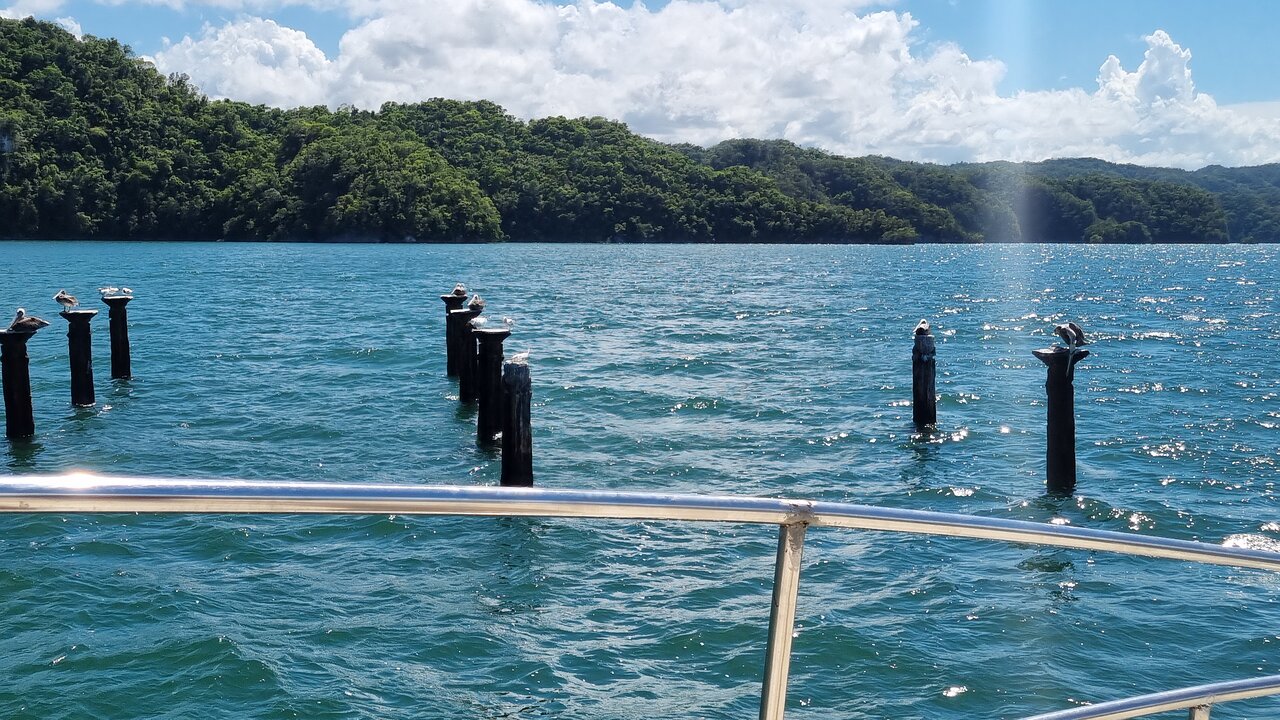
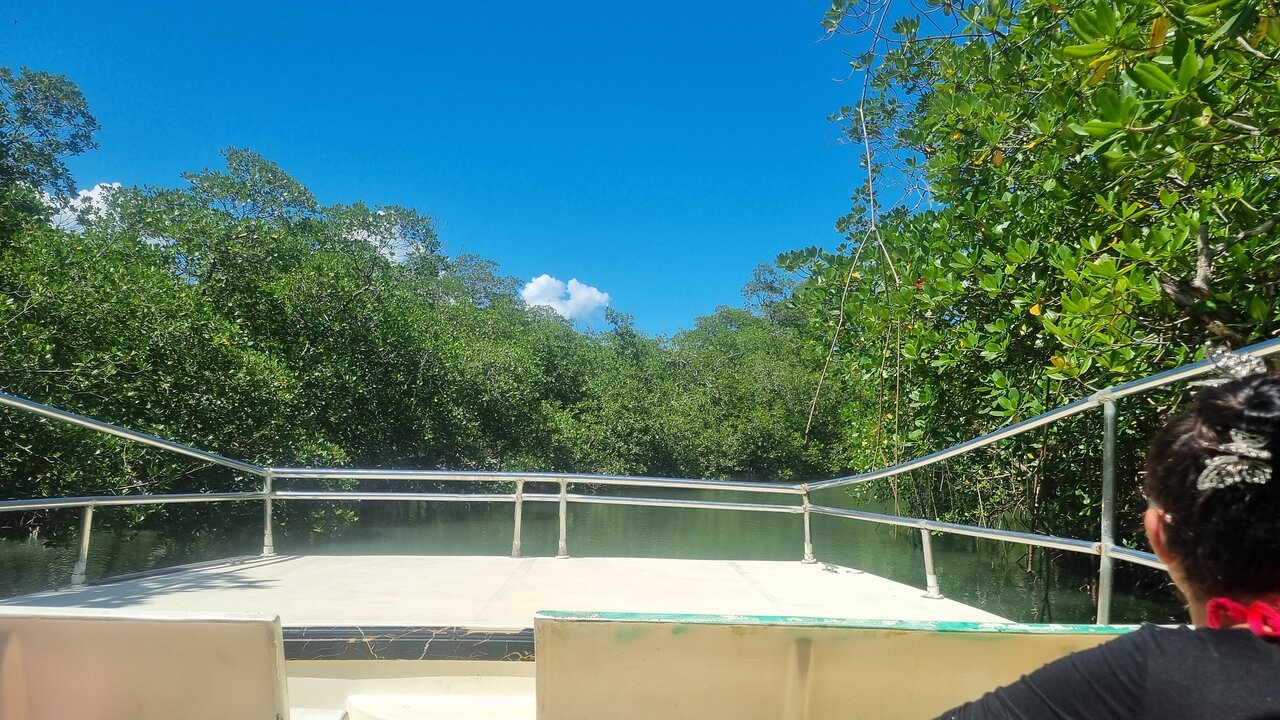
Los Haitises contains a diverse landscape of forest, limestone formations, mangroves and coastal vegetation. The variety of wooded environments makes the region relevant to birdwatchers interested in the Antillean Piculet.
Specialist birding records identify Los Haitises National Park as a promising location for observing the species. Paraíso Caño Hondo and Los Limones are among the named areas mentioned in those observations.
Visitors should remember that habitat suitability does not guarantee a sighting. The bird can be difficult to locate even in places where it is known to occur.
5. How the Antillean Piculet Searches for Food
One of the most unusual aspects of the Antillean Piculet is the way it searches for food.
Many familiar woodpeckers spend considerable time clinging to tree trunks and striking or probing wood. The Antillean Piculet often behaves differently.
Historical field research describes it as a bird that searches for insects by gleaning them from vegetation. Gleaning means picking small food items from leaves, branches, bark and other surfaces.
It may also probe into suitable spaces while searching for prey.
Its diet includes insects and other small invertebrates. Ants and beetles are among the food groups reported in species references.
This feeding strategy allows the bird to use vegetation in ways that resemble the behavior of some small forest songbirds.
Why this behavior is interesting
The Antillean Piculet demonstrates that members of the same bird family do not always use identical feeding methods.
Its bill, body shape and movement help it explore small surfaces and vegetation. Instead of relying mainly on repeated drilling into wood, it can search for food across branches and other parts of the forest.
For visitors, watching the bird feed may provide a better identification clue than looking only at its plumage.
6. How Does the Antillean Piculet Move?
The Antillean Piculet is known for its unusual movement compared with typical woodpeckers.
Research summarized by the American Ornithological Society describes it as having more passerine-like foraging and locomotory behavior. Rather than always clinging vertically to trunks, it can move along branches with its body at an angle or more horizontally positioned.
This difference is important for birdwatchers.
If you are searching for the species, do not look only at the main trunk of a tree. Pay attention to smaller branches, leafy sections and tangled vegetation where it may be feeding.
Its movements can be quick and somewhat inconspicuous. It may appear briefly, move around a branch and disappear behind foliage.
Patience is therefore useful. Instead of walking quickly from one area to another, pause and observe the vegetation around you.
7. The Antillean Piculet's Calls and Communication
Sound is one of the most useful clues for locating this bird.
The Antillean Piculet has a distinctive vocalization described as a short, strong and rapid series of notes. The sound can help reveal its presence when the bird is difficult to see.
Another interesting feature is antiphonal calling. This occurs when two birds respond to each other with coordinated calls.
Historical research on the species describes this type of vocal interaction and notes that male and female birds may answer one another.
This behavior is particularly interesting in dense forest environments. Birds do not always need to remain in direct visual contact to communicate.
For birdwatchers, listening carefully can be more productive than searching visually without a clear direction.
However, visitors should avoid playing recorded calls to attract birds, particularly near possible nesting areas. Playback can disturb natural behavior and should not be used without following appropriate birdwatching ethics and local guidance.
8. Does the Antillean Piculet Make Its Own Nest?
The Antillean Piculet is a cavity-nesting bird, but it should not be confused with the larger Hispaniolan Woodpecker in its approach to nesting.
Species references describe it as using natural holes or old cavities made by the Hispaniolan Woodpecker rather than routinely excavating its own cavities.
This is an important ecological distinction.
The Hispaniolan Woodpecker can create nesting holes by removing wood from suitable trees. The Antillean Piculet may use existing cavities, making the availability of suitable holes relevant to its nesting opportunities.
This relationship illustrates how different bird species can use the same forest resources in different ways.
A tree cavity may serve one species during one breeding period and become useful to another species later. The availability of natural holes can therefore contribute to the complexity of forest habitats.
Visitors should never approach, touch or block a suspected nest cavity. Disturbing nesting birds can affect their behavior and breeding success.
9. How Is the Antillean Piculet Different From the Hispaniolan Woodpecker?
The Antillean Piculet and Hispaniolan Woodpecker are both members of the woodpecker family, but they are quite different in appearance and behavior.
FeatureAntillean PiculetHispaniolan WoodpeckerScientific nameNesoctites micromegasMelanerpes striatusGeneral sizeSmallNoticeably largerAppearanceOlive-brown with pale, marked underpartsStrongly barred body patternCrownMale has red and yellow; female yellowAdult male has a predominantly red crownFeeding behaviorOften gleans insects from vegetationFrequently searches trunks and branchesTree excavationUses natural or existing cavitiesExcavates nesting cavitiesMovementOften moves along branches in unusual positionsMore typical woodpecker clinging and climbing behavior
The most important distinction is that the Antillean Piculet is not simply a miniature version of the Hispaniolan Woodpecker.
Its feeding behavior, locomotion and nesting strategy are different enough to make it a particularly interesting species in its own right.
Visitors who learn to recognize both birds can better appreciate the diversity of the woodpecker family in the Dominican Republic.
10. Is the Antillean Piculet Endangered?
The 2024 global IUCN Red List assessment classifies the Antillean Piculet as Least Concern.
However, the same assessment records a decreasing population trend. The number of mature individuals is listed as unknown.
This distinction is important. Least Concern does not mean that the species has no conservation concerns or that its habitat can be changed without consequences.
The bird depends on wooded environments for feeding and nesting. Habitat degradation and forest loss can affect the availability of suitable feeding areas and natural cavities.
Because the species has a restricted geographic range, protecting natural habitats across Hispaniola remains valuable.
For Los Haitises, responsible conservation means maintaining the variety of forest and coastal vegetation that supports the park's wildlife.
11. Where Can Birdwatchers Look for the Antillean Piculet in Los Haitises?
Los Haitises is a recognized area for birdwatching, and specialist birding observations identify the Antillean Piculet as a species that can be found in the park.
Paraíso Caño Hondo and Los Limones are among the locations mentioned in specialist observations.
When looking for the species, focus on:
- Smaller branches within wooded areas.
- Leafy sections where insects may be available.
- Dense vegetation and tangled branches.
- Bird calls coming from nearby trees.
- Short movements between branches.
A pair of binoculars can make a significant difference. Because the bird is small and can remain partly hidden by foliage, binoculars allow visitors to observe it without approaching too closely.
A local guide familiar with the park's birdlife may also help visitors understand which habitats are suitable for observation.
Nevertheless, no particular wildlife encounter should be guaranteed. Bird activity changes with conditions, and a visitor may not see every species on a single trip.
12. Responsible Birdwatching Around Small Forest Birds
Small birds can be especially vulnerable to disturbance around feeding and nesting sites.
Visitors should keep a respectful distance and avoid trying to force a bird into view.
Good birdwatching practices include:
- Move slowly through permitted areas.
- Avoid loud conversations near wildlife.
- Do not touch trees or suspected nesting cavities.
- Never remove branches or vegetation to improve a photograph.
- Avoid using playback calls to attract birds.
- Use binoculars or a camera zoom rather than approaching closely.
- Follow park regulations and local guide instructions.
Photography should never take priority over the bird's safety.
A photograph of a bird behaving naturally is more valuable than an image obtained by disturbing its habitat.
13. Why the Antillean Piculet Makes Los Haitises Special
Los Haitises is widely appreciated for its mangrove channels, limestone formations, caves and coastal scenery. But its importance also comes from the wildlife living among its forests and vegetation.
The Antillean Piculet is a good example of this less visible natural heritage.
It is endemic to Hispaniola, has an unusual evolutionary position among woodpeckers and uses feeding and movement strategies that differ from those of more familiar species.
Its relationship with existing tree cavities also shows how different forest birds can depend on the same natural structures.
For visitors arriving through Sabana de la Mar, learning about the Antillean Piculet adds another reason to appreciate the park beyond its most famous landscapes.
The bird may be small and difficult to spot, but understanding its behavior helps reveal the complexity of the ecosystem.
Frequently Asked Questions
What is the scientific name of the Antillean Piculet?
Its scientific name is Nesoctites micromegas.
Is the Antillean Piculet found in Los Haitises National Park?
Yes. It is included in the Los Haitises bird checklist, and specialist birding observations identify the park as a place where it can be found.
Is the Antillean Piculet endemic to the Dominican Republic?
It is endemic to Hispaniola, the island shared by the Dominican Republic and Haiti. A recognized subspecies is also associated with Gonâve Island.
How can I identify a male Antillean Piculet?
The male has a yellow crown with a distinctive red patch. Its olive-brown upperparts and pale, marked underparts are also useful identification features.
How is a female Antillean Piculet different?
The female has an all-yellow crown patch rather than the male's red-and-yellow crown marking.
What does the Antillean Piculet eat?
Its diet includes insects and other small invertebrates, including ants and beetles.
Does the Antillean Piculet drill holes in trees?
It is not known for routinely excavating its own nesting cavities like the Hispaniolan Woodpecker. Species references describe it as using natural holes or old woodpecker cavities.
Is the Antillean Piculet endangered?
The 2024 IUCN assessment lists it as Least Concern, although its population trend is recorded as decreasing.
Can I see the Antillean Piculet during a Los Haitises boat tour?
It may be possible to observe the species in suitable wooded habitats, but sightings are not guaranteed. Its small size and inconspicuous behavior can make it difficult to locate.
Explore the Birdlife of Los Haitises
The Antillean Piculet is one of the many reasons to look beyond the famous caves and mangrove waterways of Los Haitises National Park. Its unusual feeding behavior, distinctive crown markings and relationship with natural tree cavities make it an interesting species for nature enthusiasts.
If you are planning a visit from Sabana de la Mar, consider including time for quiet wildlife observation alongside the park's landscapes and waterways.
Choose a responsible excursion, respect the natural environment and enjoy discovering the birds that make Los Haitises one of the Dominican Republic's distinctive nature destinations.
Local explorer & expert guide in El Limón Waterfall.