Clapper Rail in Los Haitises: A Secretive Bird of Coastal Marshes
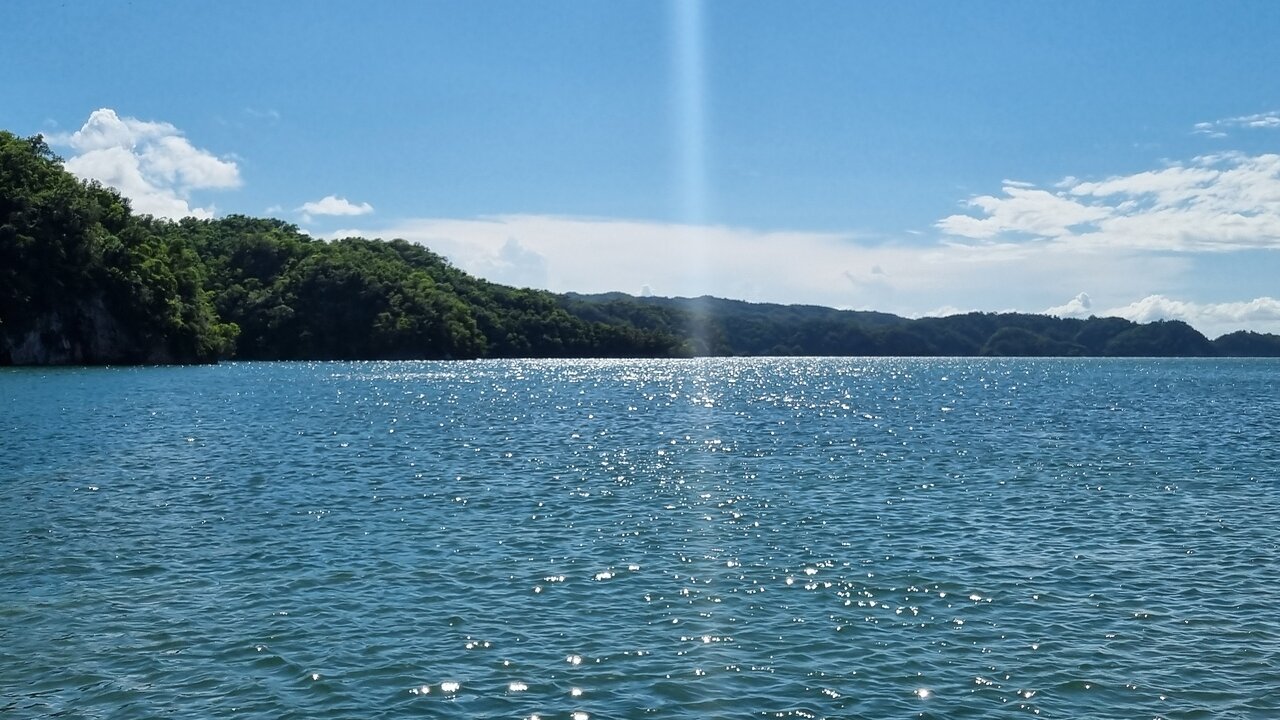
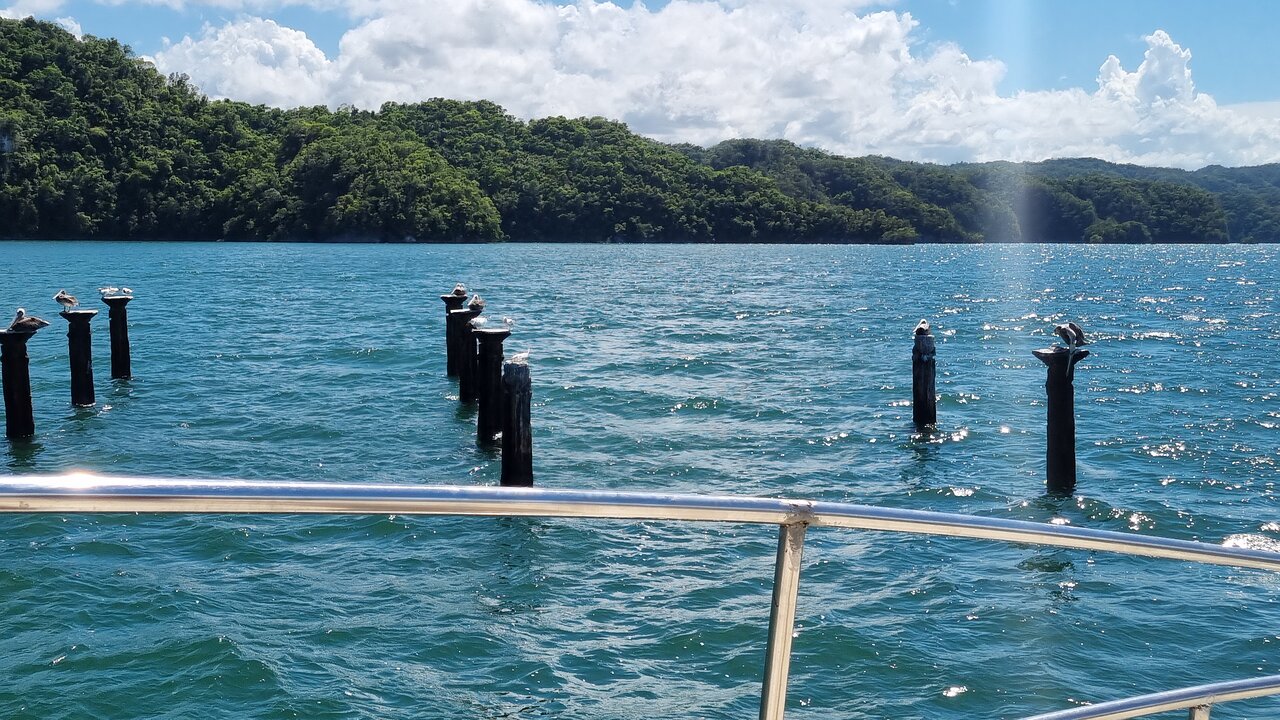
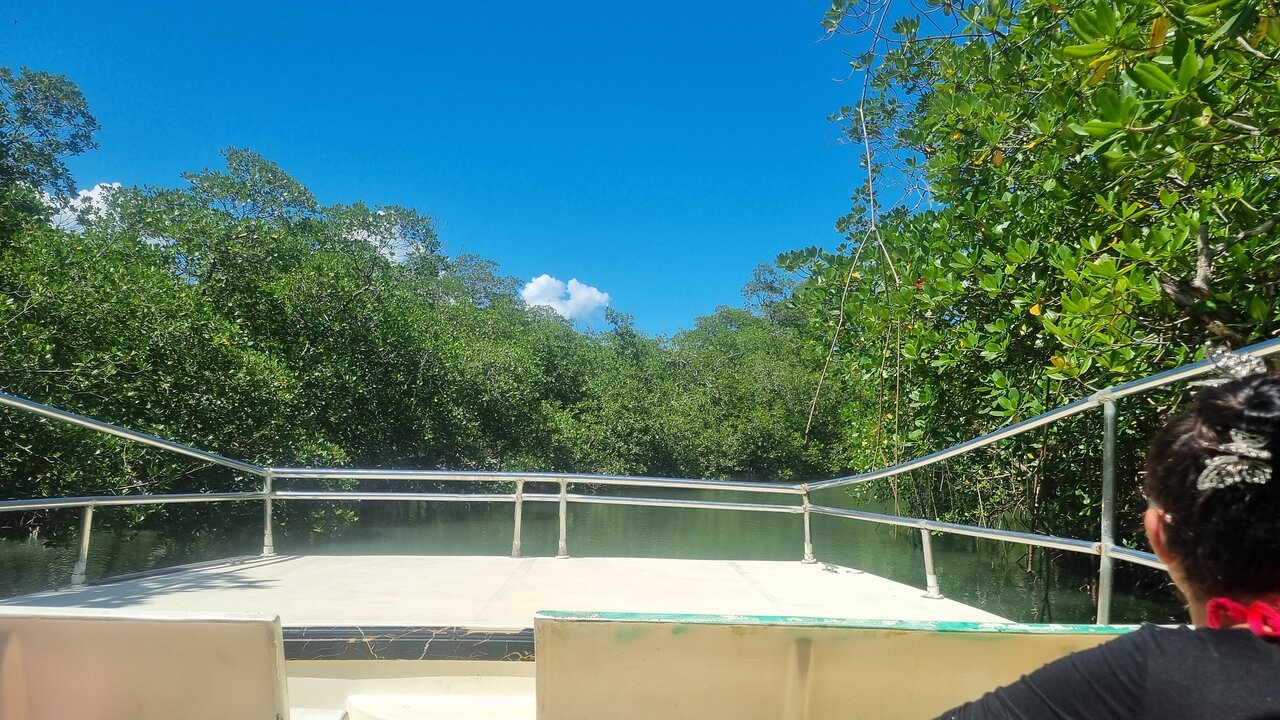
Los Haitises National Park is famous for its mangrove forests, winding waterways, limestone islands and remarkable birdlife. Its coastal landscape provides important habitat for many birds, including species that spend most of their lives hidden among marsh plants and dense vegetation.
One interesting bird associated with Caribbean coastal wetlands is the Clapper Rail (Rallus crepitans). This secretive marsh bird is known for its loud clattering calls, long orange bill and ability to move almost unnoticed through thick vegetation.
The Caribbean population group, Rallus crepitans caribaeus, occurs on Hispaniola, the island shared by the Dominican Republic and Haiti. The species is recorded in the Dominican Republic's national bird lists. However, the current Avibase checklist consulted for Los Haitises National Park does not list the Clapper Rail among its recorded park species. Therefore, it is more accurate to discuss the bird as part of the wider Dominican coastal birdlife rather than claim a confirmed record within the park itself.
For travellers exploring Sabana de la Mar and the surrounding coastal environment, learning about the Clapper Rail offers an opportunity to understand the specialized wildlife of Caribbean saltwater wetlands.
What Is a Clapper Rail?
The Clapper Rail is a medium-to-large marsh bird belonging to the rail family, Rallidae. Its scientific name is Rallus crepitans.
It is a chicken-sized bird with a relatively slender body, long legs, a short tail and a long, slightly curved bill. Its plumage generally combines brown, gray and cinnamon tones, with darker markings along the back and barred patterns on the flanks.
Unlike many waterbirds that spend considerable time in open water, Clapper Rails usually remain inside thick marsh vegetation. They walk through grasses, reeds and mangrove growth, searching for food along shallow waterways and muddy edges.
The bird is also famous for its loud calls. Its repeated clattering vocalizations can reveal its presence even when the animal is completely hidden.
The name Clapper Rail reflects the distinctive sound of these calls. In Spanish-language bird references, the species may be listed under names such as gallinuela de manglar or rascón crepitante.
Is the Clapper Rail Found in the Dominican Republic?
Yes. The Clapper Rail is included in the wider birdlife of the Dominican Republic. Its Caribbean population group, Rallus crepitans caribaeus, has a geographic range that includes Hispaniola, Cuba and Puerto Rico, extending into parts of the northern Caribbean.
Older bird references may use the scientific name Rallus longirostris for this species. Taxonomic classifications have changed over time, so readers may encounter both names in older books, birding reports and historical records.
It is important to distinguish between national distribution and a confirmed record at a particular location.
The Dominican Republic's national checklist includes the Clapper Rail, but the Avibase checklist for Los Haitises National Park consulted for this article does not currently include it. This means the article should not promise visitors that they can see the species inside the park.
A bird's presence somewhere on Hispaniola does not automatically establish its presence at every coastal wetland on the island.
Why Is the Clapper Rail Associated With Coastal Marshes?
The Clapper Rail is strongly connected to saltwater and brackish wetlands. These environments provide the shallow water, mud, vegetation and food resources it needs.
Typical habitats include:
- Coastal salt marshes
- Brackish marshes
- Mangrove swamps
- Tidal creeks
- Muddy channels
- Wetland edges with dense grasses and other emergent plants
The vegetation is especially important. It gives the bird places to hide, move, feed and establish nesting territories.
A Clapper Rail can travel through dense plants without exposing itself to predators or disturbances. It may emerge briefly at the edge of a creek or mudflat before disappearing into cover again.
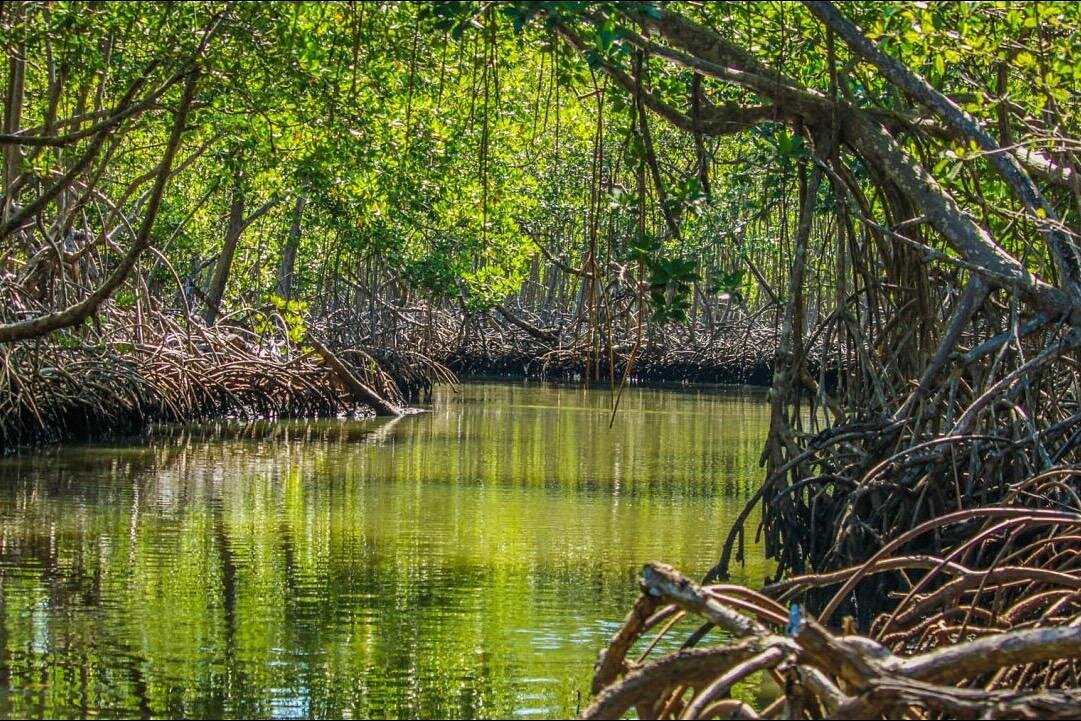
Los Haitises is well known for its mangrove channels and coastal ecosystems. These habitats make the park an important place to learn about Caribbean wetland ecology, even though the current local checklist does not establish the Clapper Rail as a confirmed park species.
How to Identify a Clapper Rail
Identifying a Clapper Rail can be challenging because it often stays hidden. However, its body shape, bill, plumage and calls provide several useful clues.
1. Long, slightly curved bill
The Clapper Rail has a relatively long, narrow bill, usually orange or orange-brown. It uses this bill to probe mud and vegetation while searching for food.
2. Gray face and cheeks
The grayish face and cheek area can be useful identification features. The exact appearance varies across the species' geographic range.
3. Brown or cinnamon body
Its body is generally brownish or gray-brown, with lighter areas around the neck and breast. Caribbean birds can show regional differences in coloration.
4. Barred flanks
The sides and lower body show dark-and-light barring. This pattern helps distinguish the Clapper Rail from some other marsh birds.
5. Short tail
The bird has a short tail, which it may raise while walking through vegetation.
6. Chicken-like shape
Its overall shape resembles a slender chicken adapted to marsh habitats. It is larger and longer-billed than many small rails.
When identifying a bird, consider all these features together. A distant view of a brown bird in marsh vegetation may not be enough for a reliable identification.
Why Is the Clapper Rail So Difficult to See?
Clapper Rails are famously secretive. They spend much of their time inside dense vegetation, where their brown and gray plumage blends into the surroundings.
There are several reasons why visitors may hear one without seeing it.
Dense vegetation: Coastal marsh plants provide excellent cover, allowing the bird to move without entering open spaces.
Quiet movement: The bird often walks or runs through vegetation rather than flying. It can disappear quickly when disturbed.
Short appearances: A Clapper Rail may briefly emerge along a muddy channel before returning to cover.
Natural camouflage: Its body colors blend with dead leaves, grasses, mud and shaded marsh vegetation.
For birdwatchers, patience is essential. Listening carefully and observing the edges of suitable habitat can be more effective than trying to search through every patch of vegetation.
What Does the Clapper Rail Eat?
The Clapper Rail is an omnivorous bird. It eats a range of small animals and other food available in coastal wetlands.
Its diet can include:
- Small crabs
- Aquatic insects
- Worms
- Small molluscs
- Other small invertebrates
- Small fish and other aquatic animals
- Seeds and plant material
The bird searches for food by walking through shallow water and probing mud, wet vegetation and the edges of tidal channels.
Its long bill is useful for reaching small prey hidden in soft sediment or among plants.
The exact diet depends on the habitat and food resources available. A Clapper Rail feeding in a coastal marsh may encounter different prey from one living in another type of wetland.
Understanding the Clapper Rail's Calls
The Clapper Rail is known for its loud, repetitive clattering call. Its vocalizations are often easier to detect than the bird itself.
A typical call consists of a series of harsh notes that may sound like a rattling or clapping sequence. The bird can also produce shorter calls and other sounds used in communication.
These vocalizations are particularly useful for researchers and experienced birdwatchers because they help indicate that a rail is present in thick vegetation.
However, hearing a rail-like call does not automatically confirm the species. Other rails and wetland animals can produce sounds that may be confusing to inexperienced listeners.
If you hear a repeated clattering sound near a coastal wetland, remain quiet and observe from a distance. Avoid walking into the vegetation or repeatedly playing recorded calls to force the bird to respond.
Is the Clapper Rail Related to Other Rails in Los Haitises?
Yes. The Clapper Rail belongs to the family Rallidae, which also includes Soras, Spotted Rails, gallinules and coots.
Several other members of this family are included in the Los Haitises bird checklist. Comparing their appearance helps explain the diversity of wetland birds in the region.
BirdMain identification featuresClapper RailLong orange bill, gray face, brown body and barred flanksSoraSmaller body, short yellow bill and dark facial markingsSpotted RailDark plumage with prominent white spotting and barringCommon GallinuleDark body, red frontal shield and red-and-yellow billPurple GallinuleBright blue-purple plumage, red bill and yellow legsAmerican CootDark body, white bill and lobed toes
The Clapper Rail is particularly associated with coastal saltwater and brackish marshes. The Sora is more strongly associated with freshwater marsh vegetation, although it can use other wetland habitats.
The Common and Purple Gallinules are generally more colorful, while the American Coot has a distinctive white bill.
These differences are useful when studying the wider bird community, but they do not mean all these species share the same habitat or are found along the same visitor routes.
Clapper Rail and Mangrove Ecosystems
Mangroves are among the most important coastal ecosystems in the Caribbean. Their tangled roots and dense vegetation create sheltered environments for fish, crustaceans, molluscs and many bird species.
Some Clapper Rail populations use mangrove swamps, while others are especially associated with salt marshes dominated by grasses and other coastal plants.
The relationship between the bird and mangrove ecosystems is therefore connected to the availability of suitable cover and food rather than a dependence on mangrove trees alone.
Mangrove ecosystems provide several important ecological functions:
- They offer shelter for young fish and other aquatic animals.
- Their roots help reduce shoreline erosion.
- They trap sediment and contribute to coastal stability.
- They provide feeding and resting areas for wildlife.
- They support complex food webs involving plants, fish, crabs and birds.
Los Haitises is widely recognized for its mangrove channels and coastal biodiversity. Understanding the ecology of these environments helps visitors appreciate why protecting the park's natural systems is important.
Does the Clapper Rail Migrate?
The movement patterns of Clapper Rails vary across their geographic range and population groups.
Some populations remain in the same general coastal areas throughout the year, while others may make local or seasonal movements depending on food availability, weather and habitat conditions.
For the Caribbean group associated with Hispaniola, it is important not to assume the same migration pattern as northern North American populations.
The species' presence in the Dominican Republic should be understood within its Caribbean distribution. A visitor should not expect a particular month to guarantee a sighting in Los Haitises or Sabana de la Mar.
Local habitat conditions and documented observations are more useful than applying a general migration calendar to a specific destination.
Is the Clapper Rail Endangered?
The Clapper Rail is classified globally as Least Concern in the IUCN assessment published in 2018. However, the assessment reported a decreasing population trend at the time.
This classification does not mean that every population is secure or that coastal marshes face no threats.
Important pressures on coastal wetland birds include:
- Destruction and fragmentation of marsh habitat
- Coastal development
- Changes in natural tidal flow
- Pollution and water contamination
- Disturbance around nesting and feeding areas
- Loss of mangrove and marsh vegetation
The condition of coastal wetlands is particularly important for species that depend on dense vegetation and shallow water.
Protecting natural habitats in and around Los Haitises benefits a much wider range of wildlife, including fish, crustaceans, reptiles and many other bird species.
Responsible Birdwatching Around Sabana de la Mar
Visitors interested in coastal birds can make their experience more rewarding by observing wildlife without disturbing it.
Follow these practical guidelines:
- Keep a respectful distance: Do not approach a hidden bird simply to obtain a photograph.
- Use binoculars: They allow you to observe wildlife without entering sensitive vegetation.
- Avoid trampling marsh plants: Coastal vegetation provides shelter and feeding habitat.
- Do not use repeated playback: Artificial calls can disturb territorial and nesting birds.
- Keep waterways clean: Take rubbish away and avoid polluting channels.
- Follow permitted routes: Respect protected-area rules and local instructions.
- Avoid disturbing nests: Never approach eggs, chicks or nesting vegetation.
A good wildlife experience is not measured by the number of rare birds seen. Learning about the habitat and observing animals without disturbing them are equally important.
Can You See a Clapper Rail on a Los Haitises Boat Tour?
Visitors should not book a standard Los Haitises boat tour expecting a guaranteed Clapper Rail sighting.
Although the species occurs in the wider Caribbean and is recorded in the Dominican Republic, the current Avibase checklist consulted for Los Haitises National Park does not list it as a confirmed park species.
A typical excursion may focus on mangrove channels, limestone formations, caves and coastal scenery. These activities do not necessarily include a specialist search for secretive marsh birds.
If birdwatching is your main interest, ask the excursion provider about the actual route, available habitats and time allocated for wildlife observation. Confirm whether the activity is a general sightseeing trip or a dedicated birdwatching experience.
Travellers planning from Sabana de la Mar should also confirm meeting points, transport arrangements and any additional activities before booking.
The most responsible approach is to enjoy the region's documented birdlife while treating unconfirmed species as possibilities for further research rather than promised attractions.
Photography Tips for Secretive Marsh Rails
Photographing a Clapper Rail requires patience because the bird often remains inside dense vegetation.
If you encounter one in a suitable habitat, these techniques may help:
- Use a telephoto lens so you can photograph from a safe distance.
- Watch for movement along creek edges and openings in the marsh.
- Focus on the eye and bill when the bird appears.
- Use natural light to capture its subtle brown and gray markings.
- Avoid sudden movements that might cause the bird to hide.
- Never enter sensitive vegetation or approach a nest for a photograph.
A photograph showing the bird in its natural coastal habitat can communicate more than a close-up alone. It can also help readers understand the relationship between the species and the wetlands it uses.
Frequently Asked Questions About the Clapper Rail
1. Is the Clapper Rail found in the Dominican Republic?
Yes. The Clapper Rail is included in the Dominican Republic's wider birdlife records. Its Caribbean group, Rallus crepitans caribaeus, occurs on Hispaniola.
2. Is the Clapper Rail confirmed in Los Haitises National Park?
The current Avibase Los Haitises checklist consulted for this article does not list the Clapper Rail. Therefore, this article does not claim a confirmed park record.
3. What is the scientific name of the Clapper Rail?
Its current scientific name is Rallus crepitans. The Caribbean population group is commonly referred to as Rallus crepitans caribaeus.
4. What does a Clapper Rail look like?
It is a medium-to-large marsh bird with a long orange bill, gray facial areas, brown or cinnamon plumage, barred flanks and a short tail.
5. Why is the Clapper Rail difficult to see?
It spends much of its time inside dense marsh vegetation. Its natural coloration helps it blend into grasses, mangrove growth and muddy surroundings.
6. What does the Clapper Rail eat?
It eats small crabs, insects, worms, molluscs, small aquatic animals and other available food.
7. Does the Clapper Rail live in mangroves?
Some populations use mangrove swamps, while others are closely associated with salt marshes and brackish wetlands. It is a coastal wetland bird rather than an exclusively mangrove-dependent species.
8. What sound does a Clapper Rail make?
Its best-known call is a loud, repeated clattering sound. The call may be heard from within dense vegetation even when the bird cannot be seen.
9. Is the Clapper Rail endangered?
It was classified globally as Least Concern in the 2018 IUCN assessment, which reported a decreasing population trend. Coastal habitat loss remains an important concern.
10. Can I book a Clapper Rail-watching tour in Sabana de la Mar?
Do not assume that a dedicated Clapper Rail-watching tour is available. Ask local operators about their actual routes, birdwatching activities and suitable coastal wetland access before making arrangements.
Explore the Coastal Wildlife of the Los Haitises Region
The Clapper Rail is an interesting example of how birds adapt to coastal marshes. Its long bill, secretive movements and loud calls make it a distinctive member of the Caribbean's wetland bird community.
Although the current Los Haitises park checklist does not confirm the species within the park, its wider presence in the Dominican Republic makes it relevant to understanding the country's coastal biodiversity.
For travellers visiting Sabana de la Mar, Los Haitises and the surrounding region, learning about the Clapper Rail adds another perspective to the natural environment. Mangroves, marshes, tidal channels and other coastal habitats all contribute to the ecological richness of this part of the Dominican Republic.
Choose responsible nature experiences, respect protected habitats and avoid expecting guaranteed sightings of elusive wildlife. Protecting coastal wetlands helps preserve the natural systems that support the Caribbean's remarkable birdlife.
Local explorer & expert guide in El Limón Waterfall.