Wildlife of Los Haitises National Park: Animals, Birds and Marine Life to Look For
Los Haitises National Park is one of the Dominican Republic's important natural areas for wildlife. Its tropical forests, mangroves, coastal waterways, limestone hills, caves and nearby marine habitats create a variety of environments where different species can live and feed.
For visitors, the park offers opportunities to observe birds, discover unusual plants and learn about the animals that depend on its protected habitats. Some wildlife is relatively easy to notice from a boat or along an authorized nature route. Other species are elusive, nocturnal or naturally cautious.
The park is especially significant for its birdlife and for native species found only on the island of Hispaniola. Understanding this biodiversity can make a visit to Los Haitises more rewarding—and encourage travelers to explore without disturbing the animals they hope to see.
Why Is Los Haitises Important for Wildlife?
Los Haitises contains several connected ecosystems, including humid broadleaf forest, mangroves, rocky coastal areas, small islands, caves and marine environments.
Each habitat supports different forms of life. Mangrove roots provide shelter for aquatic organisms, forest vegetation offers food and cover for birds and mammals, and caves provide important habitat for bats.
A park management plan prepared for the 2012–2017 period reported a rich variety of plants and animals, including 178 bird species and several endemic amphibians and reptiles. These figures come from that historical management document and should not be interpreted as a current, complete species count.
The park's value is not simply the number of species recorded. It is also the combination of habitats that allows different forms of wildlife to survive in one protected landscape.
1. Birds of Los Haitises National Park
Birds are among the wildlife visitors are most likely to notice during a Los Haitises excursion. They may be seen flying above the water, resting in mangroves, moving through forest vegetation or feeding along the coast.
The official Dominican Republic tourism website highlights several birds associated with the park, including:
- Ridgway's hawk
- Sierra woodpecker
- Hispaniolan woodpecker
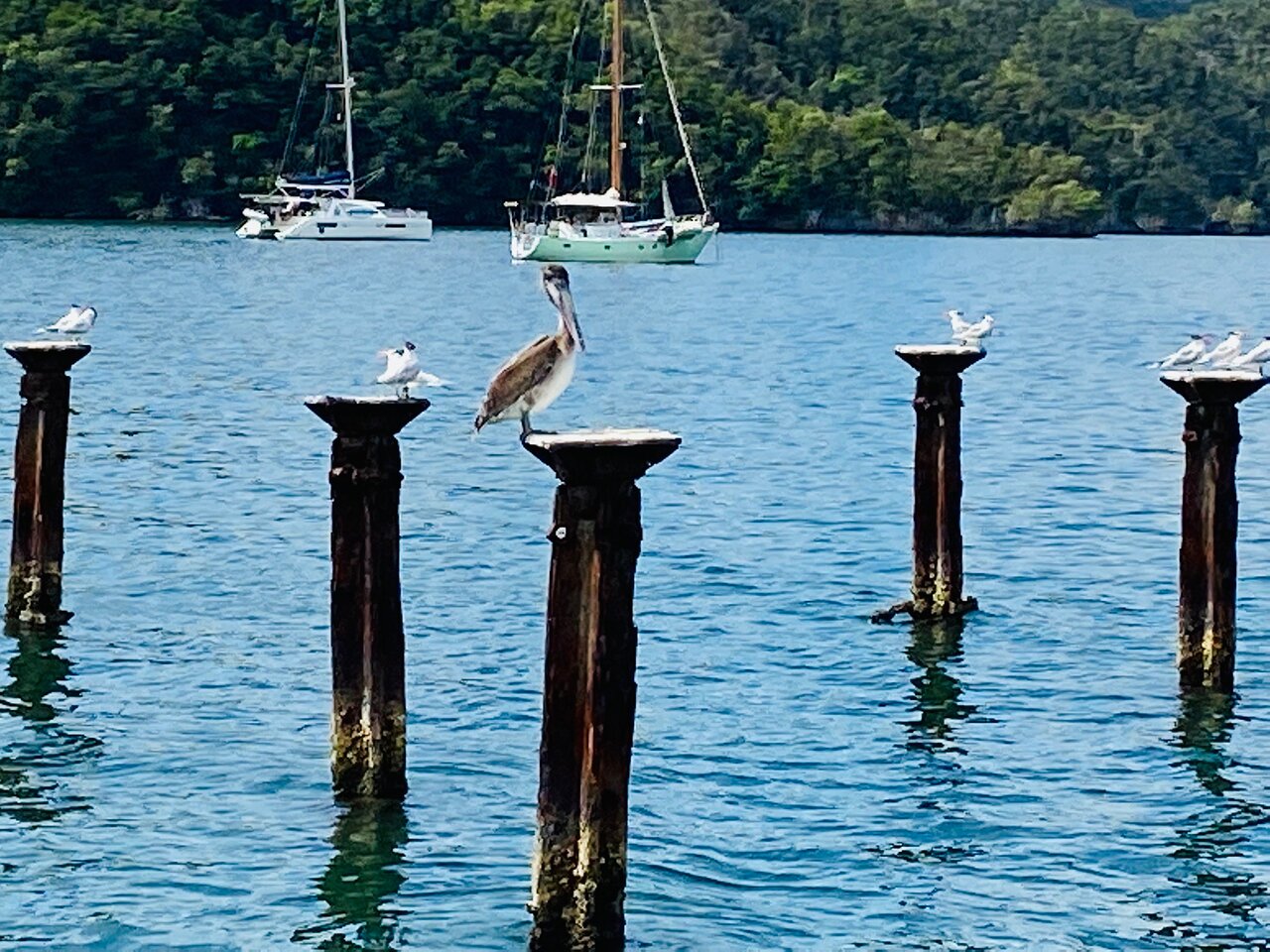
- Brown pelican
- Herons
- Egrets
Other bird species are documented in biodiversity assessments of the wider Los Haitises area. Their presence varies with habitat, season and location.
Ridgway's Hawk
The Ridgway's hawk (Buteo ridgwayi) is one of the most conservation-important birds associated with Los Haitises.
This rare raptor is endemic to Hispaniola, meaning it is naturally found only on this Caribbean island. It is recognized as critically endangered and is a major reason the region is important for bird conservation.
The hawk is a forest bird, so a visitor traveling only through open waterways may not see one. Observing it requires patience, suitable habitat and a little luck.
If you are fortunate enough to spot one, watch from a respectful distance. Do not approach nests or try to attract the bird with food or sounds.
Hispaniolan Parrot
The Hispaniolan parrot (Amazona ventralis) is another notable bird native to Hispaniola.
It is a colorful parrot associated with forest habitats. Like many parrots, it may be more noticeable when calling or flying than when resting among leaves.
Habitat loss and illegal capture are among the conservation concerns affecting native parrots in the Caribbean. Responsible wildlife tourism should never involve buying wild-caught birds or encouraging contact with them.
Hispaniolan Woodpecker
The Hispaniolan woodpecker (Melanerpes striatus) is an endemic species of Hispaniola.
Woodpeckers use trees for feeding and nesting. Their movements and calls may help visitors notice them in forested areas.
Listen for tapping sounds and calls rather than expecting every bird to appear in an open position. Binoculars can make observation easier without requiring visitors to approach the animal.
Pelicans, Herons and Egrets
Coastal and wetland birds are especially relevant to the park's mangroves, waterways and shorelines.
Pelicans are recognizable by their large bills and distinctive fishing behavior. Herons and egrets often search for food in shallow water or rest near the shoreline.
These birds can sometimes be observed during a boat excursion. Keep a reasonable distance, avoid sudden movements and do not throw food to attract them.
Other Forest and Coastal Birds
The wider region supports additional resident, endemic and migratory birds. Depending on habitat and season, birdwatchers may encounter species such as palmchats, todies, pigeons, kingbirds and other woodland or coastal birds.
A bird checklist should be treated as a guide to species recorded in the region, not a promise that every bird will appear during a particular tour.
2. Native Mammals of Los Haitises
Some of the most interesting animals associated with Los Haitises are mammals that are difficult to observe.
Unlike the birds seen flying over waterways, many mammals spend much of their time in forest vegetation, caves or sheltered areas. Some are active mainly at night.
Hispaniolan Solenodon
The Hispaniolan solenodon (Solenodon paradoxus) is one of the island's most unusual native mammals.
It is a small, nocturnal insect-eating mammal with a long snout. It belongs to an ancient mammalian lineage and is one of the distinctive animals of Hispaniola.
Solenodons are difficult to see because they are generally active at night and spend much of their time searching for food in forest habitats.
They are also conservation-sensitive animals. Visitors should not attempt to search for them by turning over logs, entering restricted forest areas or disturbing potential shelter sites.
Hispaniolan Hutia
The Hispaniolan hutia (Plagiodontia aedium) is a native rodent found in suitable forest habitats on Hispaniola.
It is generally more active during quieter periods and may be difficult for ordinary visitors to observe.
Hutias are important because they represent part of the island's unique native mammal community. Protecting forest habitat is essential for their continued survival.
Bats
Caves and forest environments provide habitat for several bat species.
Bats perform important ecological functions. Depending on the species, they may consume insects, feed on fruit or contribute to pollination and seed dispersal.
If you visit a cave, avoid touching bats or disturbing their resting places. Loud noises, flash photography and unnecessary contact can cause stress to wildlife.
3. Reptiles Found in the Region
Reptiles are another part of the biodiversity of Los Haitises and the surrounding region.
The park's humid forests, rocky areas, wetlands and coastal habitats create different conditions for reptiles.
Hispaniolan Boa
The Hispaniolan boa (Chilabothrus striatus) is a native snake found on Hispaniola.
It is non-venomous and plays a role as a predator in the ecosystem. Like other snakes, it should be left alone when encountered.
Visitors should never try to pick up or handle a wild snake for photographs.
Lizards and Geckos
Various lizards and geckos inhabit the island's forest and rocky environments.
They may be seen on tree trunks, rocks or vegetation, although smaller species can be easy to overlook.
Observe them without touching or moving the objects where they shelter.
Marine Turtles
The wider coastal environment of the Dominican Republic supports marine turtles. Regional biodiversity sources document sea turtles in the broader Los Haitises coastal setting.
Different species use marine waters and beaches for feeding, movement or nesting. Their presence in a broad regional record does not mean that a turtle sighting is guaranteed during a national park excursion.
If you encounter a turtle, do not chase it, touch it or obstruct its movement.
4. Amphibians in the Humid Forest
Los Haitises' humid forest environments are important for amphibians, including native tree frogs.
Amphibians depend on suitable moisture and habitat conditions. Their sensitive skin and life cycles can make them vulnerable to environmental changes.
Some species are active at night or during wet conditions, so they are not always visible during daytime tours.
The historical park management plan records endemic amphibians in the area. This is another reason forest protection matters beyond the more visible wildlife that visitors may notice from boats.
Do not handle frogs or other amphibians. Observing them in their natural habitat is the safest approach.
5. Marine and Mangrove Wildlife
The park's mangroves and coastal waterways are connected to the wider marine environment of Samaná Bay.
These habitats support aquatic organisms and provide shelter for different life stages of some marine species.
Fish
Shallow coastal waters and mangrove roots can provide shelter and feeding areas for fish.
The exact species present varies by habitat and water conditions. Visitors may see movement in the water during a boat trip, but identifying fish accurately often requires clear views or specialist knowledge.
Crabs and Other Invertebrates
Crabs, mollusks and other invertebrates form part of the mangrove food web.
Some live among roots or in muddy areas, while others occupy the shallow water around the forest.
They help recycle organic material and provide food for other animals.
Manatees
The West Indian manatee (Trichechus manatus) is a large aquatic mammal associated with Caribbean coastal and estuarine environments.
Manatees are documented in the broader Los Haitises region and are important conservation species. They feed mainly on aquatic vegetation and use sheltered waters.
They are not animals visitors should expect to see on every boat trip. If one is encountered, the correct response is to keep a safe distance and avoid following or surrounding it.
6. Are Humpback Whales Part of Los Haitises Wildlife?
Humpback whales are an important part of the wider Samaná Bay region's seasonal wildlife story.
Every year, North Atlantic humpback whales migrate to warm Caribbean waters during their breeding season. The waters around Samaná are well known for seasonal whale watching.
However, it is important to distinguish the broader bay from the usual visitor routes inside Los Haitises National Park. A Los Haitises excursion through mangroves and caves should not be advertised as a humpback whale-watching tour.
Travelers interested in seeing whales should arrange a separate excursion with an appropriate operator during the seasonal viewing period.
7. Where Can You Observe Wildlife in Los Haitises?
Different habitats offer different wildlife observation opportunities.
HabitatWildlife you may learn about or observeMangrove waterwaysCoastal birds, fish and invertebratesHumid tropical forestForest birds, reptiles, amphibians and native mammalsRocky formations and islandsCoastal birds and nesting or resting speciesCavesBats and cave-associated organismsCoastal and estuarine watersAquatic organisms and, in the wider region, manatees
Wildlife observation depends on the route, time of day, season, weather and natural animal behavior. Some habitats may not be accessible on a particular excursion.
8. Best Time and Conditions for Wildlife Watching
There is no single time when every animal in Los Haitises is easiest to see.
Bird activity can vary throughout the day. Some species are more active in the morning, while nocturnal mammals and certain amphibians are much harder to observe during ordinary daytime excursions.
Weather and water conditions also affect where visitors can travel and which habitats are accessible.
For a wildlife-focused visit:
- Ask whether the itinerary includes suitable forest or mangrove observation areas.
- Choose a tour with enough time to observe rather than rushing between stops.
- Bring binoculars if possible.
- Wear comfortable clothing suitable for outdoor conditions.
- Listen to the guide's explanations and local observations.
- Keep expectations flexible because wildlife is unpredictable.
If birdwatching is your main interest, ask the operator whether the route and timing are suitable for bird observation.
9. Responsible Wildlife Watching Rules
Wildlife tourism should not put animals under unnecessary pressure.
Follow these simple principles during your visit:
- Keep a respectful distance from all animals.
- Never feed wild birds, mammals or reptiles.
- Do not touch nests, eggs, bats or other wildlife.
- Avoid loud sounds and sudden movements.
- Do not use playback calls to attract birds unless specifically authorized for research.
- Stay on approved routes and follow your guide's instructions.
- Never remove plants, feathers, shells or other natural objects.
- Take all rubbish away with you.
- Respect protected areas and temporary closures.
- Do not expect guides to guarantee sightings of rare species.
Responsible observation helps protect the animals and preserves the quality of the experience for future visitors.
10. What to Bring for Wildlife Observation
You do not need expensive equipment to appreciate Los Haitises wildlife. A few practical items can make your visit more comfortable.
- Binoculars: Helpful for observing birds without approaching them.
- Camera or phone: Useful for landscape and wildlife photography.
- Waterproof bag: Protects electronics during boat travel.
- Comfortable clothing: Choose clothing suitable for warm, humid conditions.
- Sun protection: Bring a hat and sunscreen.
- Drinking water: Stay hydrated during outdoor activities.
- Field guide or bird identification app: Useful if you want to identify species after the excursion.
Avoid using bright lights or flash around sensitive wildlife, especially in caves and at night.
Why Wildlife Conservation Matters in Los Haitises
The wildlife of Los Haitises depends on healthy and connected habitats.
Forest clearing can affect mammals and forest birds. Damage to mangroves can reduce shelter for aquatic organisms. Pollution can affect coastal food webs, while disturbance around caves can harm animals that use them for shelter.
Conservation is particularly important for endemic species because they have a naturally limited geographic range. If their habitat disappears from Hispaniola, there may be no other natural population elsewhere to replace it.
The park's importance for species such as Ridgway's hawk, the Hispaniolan solenodon and the Hispaniolan hutia shows why protecting its forests and wetlands matters.
Visitors can support this work by choosing responsible excursions and respecting the park's rules.
Frequently Asked Questions About Los Haitises Wildlife
What animals live in Los Haitises National Park?
The park and its wider ecological region support birds, bats, native mammals, reptiles, amphibians and aquatic organisms. Notable species associated with the area include Ridgway's hawk, Hispaniolan parrot, Hispaniolan solenodon, Hispaniolan hutia and West Indian manatee.
What is the most famous bird in Los Haitises?
Ridgway's hawk is one of the park's most conservation-important birds. It is endemic to Hispaniola and critically endangered.
Can visitors see the Hispaniolan solenodon?
It is possible that the species may inhabit suitable forest areas, but it is nocturnal and difficult to observe. Ordinary visitors should not expect to see one during a daytime excursion.
Are there monkeys in Los Haitises?
Monkeys are not among the native wildlife species highlighted in the main park biodiversity sources. Visitors should not expect to see wild monkeys as a normal part of a Los Haitises tour.
Can you see manatees in Los Haitises?
Manatees are documented in the wider coastal and estuarine region. However, sightings are unpredictable and should not be treated as a guaranteed excursion activity.
Are there crocodiles in Los Haitises?
Do not assume that American crocodiles are a normal or guaranteed sighting in the park. For accurate wildlife information, rely on verified park biodiversity records rather than generic online wildlife lists.
Can you see humpback whales during a Los Haitises tour?
Humpback whales are associated with the wider Samaná Bay region during their seasonal migration. A standard Los Haitises park excursion is different from a dedicated whale-watching trip.
Is Los Haitises good for birdwatching?
Yes. The park has diverse habitats that support resident, endemic and migratory birds. The best observation opportunities depend on the route, conditions and time of day.
What should I bring for birdwatching?
Binoculars, a camera, sun protection, comfortable clothing and drinking water are useful. A field guide or bird identification app can also help.
How can tourists protect wildlife during a visit?
Stay on authorized routes, avoid feeding or touching animals, keep noise low, do not disturb nests or caves and take all rubbish away.
Discover the Wildlife of Los Haitises
The wildlife of Los Haitises is one of the strongest reasons to value this national park. Its birds, native mammals, reptiles, amphibians and aquatic habitats reveal how much life can exist within a landscape of mangroves, forests, caves and coastal waterways.
A visit does not need to include a rare animal sighting to be worthwhile. Watching a heron move through a mangrove channel, listening to forest birds or learning about the endangered Ridgway's hawk can all help visitors understand the park's ecological importance.
Choose a responsible excursion, observe wildlife patiently and leave the natural environment undisturbed. That is the best way to experience the remarkable biodiversity of Los Haitises.
Local explorer & expert guide in El Limón Waterfall.


