Saona Island Marine Sediment Grain Size: Seabed Texture, Sand Sorting and Coastal Habitat Science
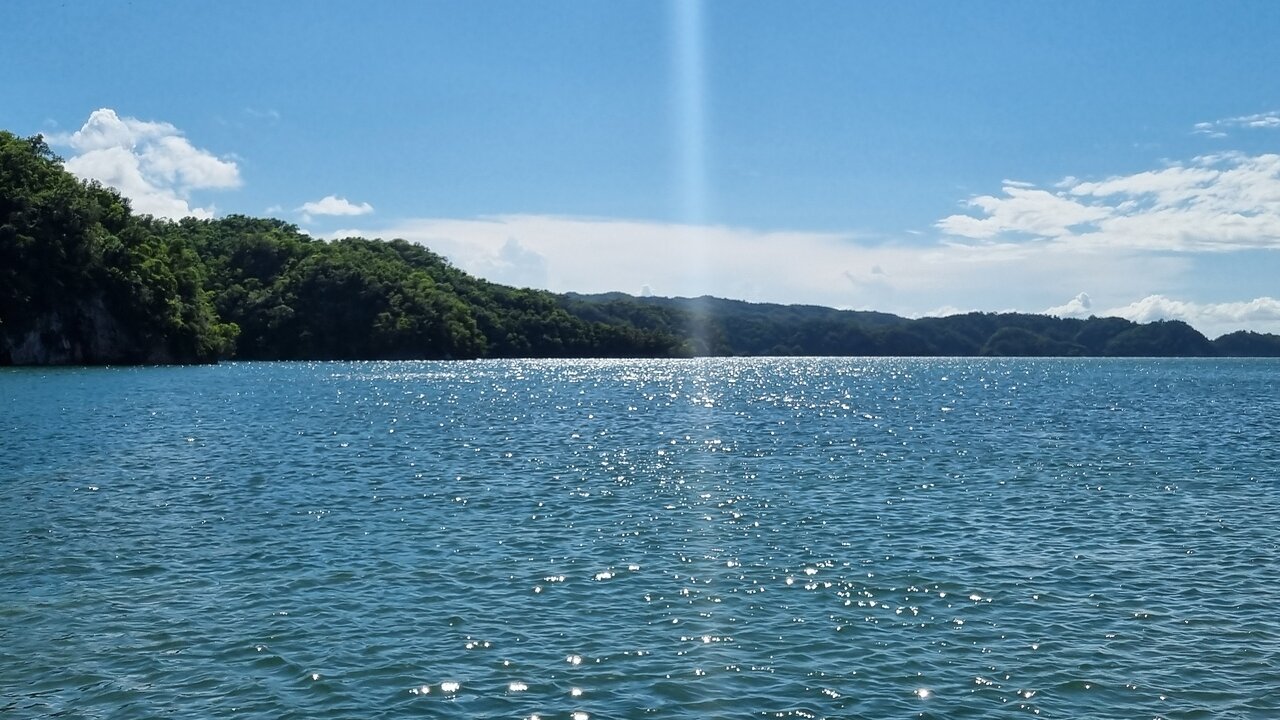
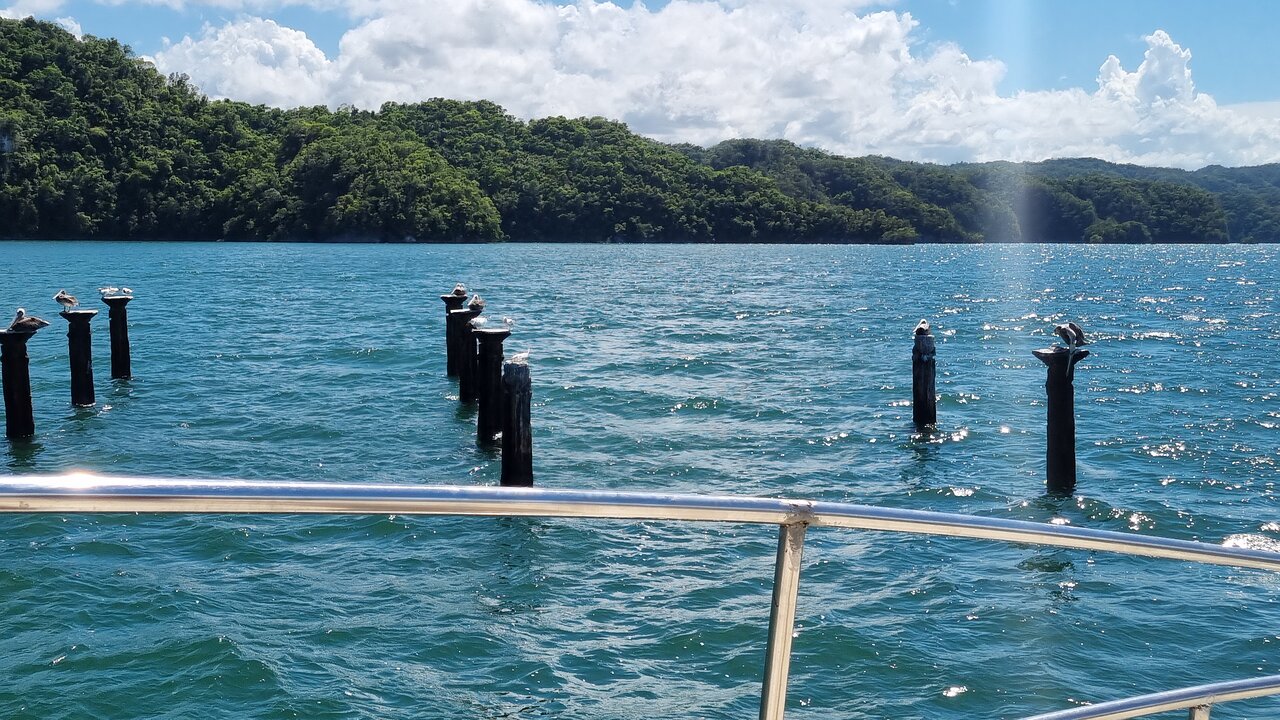
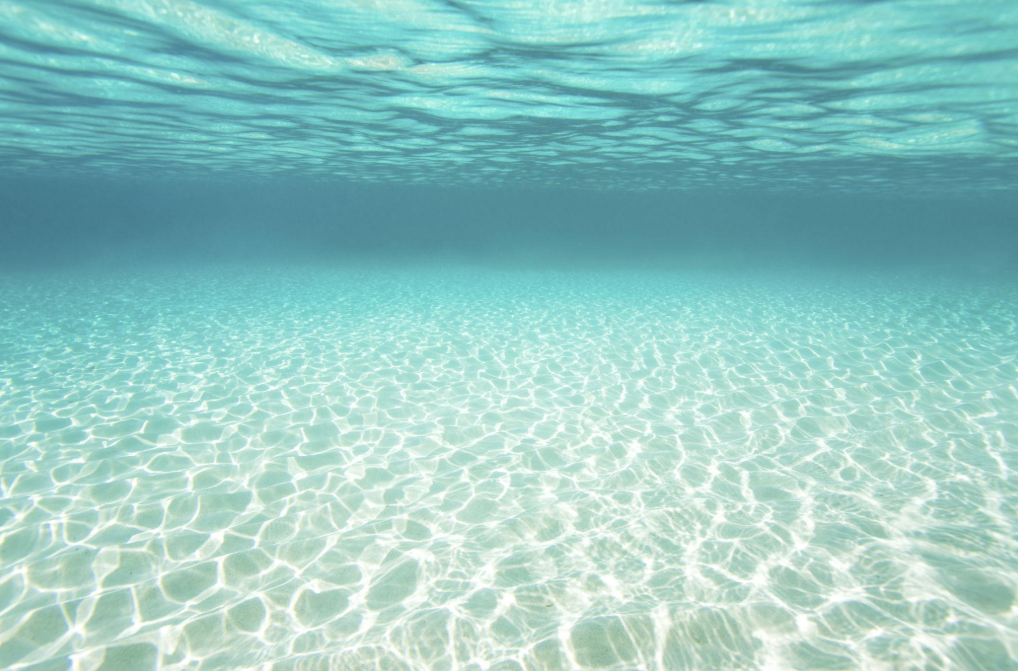
Saona Island, located off the southeastern coast of the Dominican Republic, is associated with the beautiful coastal scenery of the Caribbean. Its beaches and surrounding marine environments invite visitors to notice the color of the sand, the clarity of the water and the changing appearance of the shoreline.
Beneath these visible features is another important part of coastal science: marine sediment.
Marine sediment consists of particles and fragments that accumulate on beaches, seabeds and other underwater surfaces. These materials can vary considerably in size, shape, composition and arrangement. Their physical characteristics influence how water moves through the seabed, how particles are transported, and what kinds of physical conditions develop in coastal habitats.
One of the most useful ways to describe sediment is through grain-size analysis. This scientific method helps researchers understand the distribution of particles in a sample and compare sediment conditions between locations.
For Saona Island, studying sediment grain size could provide useful information about the physical characteristics of its coastal environments. However, specific local sediment distributions must be established through field sampling and laboratory testing rather than assumed from photographs or general descriptions.
1. What Is Marine Sediment Grain Size?
Grain size refers to the diameter or equivalent size of individual particles within a sediment sample.
Marine sediments may contain:
- Gravel and small pebbles
- Coarse, medium and fine sand
- Very fine sand
- Silt
- Clay-sized particles
- Shell fragments and other biological materials
The size of these particles influences how they settle, how easily they are moved by water and how they are distributed across coastal environments.
For example, larger particles generally require stronger flows to move than smaller particles of comparable density and shape. Very fine particles can remain suspended in water under conditions where larger sand grains settle.
Grain size is therefore an important physical property in marine geology, coastal engineering and environmental research.
2. Common Marine Sediment Size Categories
A widely used classification system is the Wentworth grain-size scale.
The broad categories include gravel, sand and mud. Mud consists mainly of silt- and clay-sized particles.
Typical size boundaries are:
Sediment categoryApproximate particle diameterGravelGreater than 2 mmSand0.0625–2 mmSilt0.0039–0.0625 mmClaySmaller than 0.0039 mm
These categories help scientists describe sediment consistently.
Sand itself can be divided into several size classes:
- Very fine sand
- Fine sand
- Medium sand
- Coarse sand
- Very coarse sand
The boundaries between classes are useful for comparing samples, but natural sediments do not always fit into one simple category. A beach or seabed sample may contain several size groups mixed together.
The U.S. National Park Service explains that beaches can contain materials ranging from mud and sand to gravel and larger particles, depending on their geological setting and coastal processes.
3. What Determines the Grain Size of Coastal Sediment?
The grain-size distribution of a coastal environment is influenced by several interacting factors.
Source material
Sediment begins with material supplied by rocks, minerals, shells and other sources.
Weathering and erosion break larger materials into smaller fragments. Rivers, coastal erosion and biological processes can contribute particles to marine environments.
The original material influences the size, shape and composition of the particles that eventually reach the coast.
Wave energy
Waves can move sediment along beaches and across shallow seabeds.
The strength and duration of wave activity influence which particles are mobilized and where they are deposited.
High-energy conditions may transport larger particles, while quieter conditions can allow finer particles to settle.
Currents
Coastal currents can transport suspended particles and move sediment along the seabed.
Changes in current speed and direction can influence the distribution of different grain sizes.
Water depth
Water depth affects the influence of waves on the seabed. Wave-related motion generally becomes weaker with increasing depth, although strong currents and storms can still move sediment in deeper areas.
Sediment availability
Even when water movement is strong enough to transport a particular grain size, that particle can only accumulate where a sufficient supply exists.
Therefore, grain-size patterns reflect both the physical energy of the environment and the availability of sediment.
4. Understanding Sediment Sorting
Sorting describes how similar or different the particle sizes are within a sediment sample.
A well-sorted sample contains particles that are relatively similar in size. A poorly sorted sample contains a wider range of particle sizes.
For example:
- A sample dominated by similarly sized sand grains may be described as well sorted.
- A mixture of fine sand, coarse sand, shell fragments and gravel may be poorly sorted.
Sorting provides information about sediment transport and deposition.
When water or wind repeatedly moves sediment, particles may become separated according to their size, density and shape. This process is sometimes called winnowing.
However, sorting is influenced by several processes, and a single sorting value does not reveal the complete history of a beach or seabed.
Researchers often examine grain-size distributions and statistical measures together to understand sediment characteristics.
5. What Is the Phi Scale?
Marine geologists frequently use the phi scale to describe sediment size.
The scale is based on the following equation:
φ = −log₂(d)
Here, d is the particle diameter in millimetres.
The phi scale works in the opposite direction to particle diameter:
- Larger particles have smaller or negative phi values.
- Smaller particles have larger positive phi values.
For example:
DiameterPhi value2 mm−11 mm00.5 mm10.25 mm20.125 mm30.0625 mm4
This logarithmic system makes it easier to compare sediment samples across a wide range of particle sizes.
Scientists can use phi values to calculate statistical measures such as mean grain size, sorting and skewness.
6. Mean Grain Size and Sediment Distribution
Mean grain size describes the central tendency of particle sizes in a sediment sample.
It provides a useful summary of whether a sample is generally coarse, medium or fine.
However, the mean alone cannot describe the entire sediment distribution.
Two samples can have similar mean grain sizes but very different proportions of fine and coarse particles.
For a more complete analysis, researchers commonly examine:
Mean: The average or central grain-size measure.
Sorting: How widely particle sizes vary around the mean.
Skewness: Whether the distribution has a longer tail toward finer or coarser particles.
Kurtosis: How concentrated or spread out the distribution is relative to its tails.
These parameters help researchers describe sediment populations more accurately.
7. Grain Shape and Roundness
Particle size is not the only important characteristic of marine sediment. Grain shape also matters.
Sediment particles may be:
- Rounded
- Subrounded
- Subangular
- Angular
- Flat or elongated
Roundness describes how smooth or sharp the edges of a particle are.
Particles may become more rounded through abrasion during transport, although the relationship is not always straightforward.
A grain's shape can influence how it packs with neighbouring particles, how easily it moves and how much space exists between individual grains.
Marine sediment samples may also contain shell fragments and irregular biological particles that differ in shape from mineral grains.
Scientists can examine these characteristics using microscopes and image-analysis techniques.
8. Porosity and Permeability of Seabed Sediments
Grain-size distribution affects the spaces between particles.
These spaces are called pores.
Porosity
Porosity describes the proportion of a material's total volume that consists of pore space.
A simple expression is:
Porosity (%) = (Pore volume / Total volume) × 100
Porosity influences how much water can be stored within a sediment layer.
However, porosity does not depend on grain size alone. Particle arrangement, sorting, compaction and grain shape also play important roles.
Permeability
Permeability describes how easily fluid can move through connected pore spaces.
Coarse, well-connected pore structures may allow water to pass more easily than tightly packed fine-grained materials.
Fine particles can also occupy the spaces between larger grains, reducing the size of pore openings.
Porosity and permeability are related but are not the same property. A sediment may contain considerable pore space while still having relatively poor permeability if its pores are small or poorly connected.
These characteristics are important when studying groundwater exchange, seabed drainage and sediment-water interactions.
9. How Grain Size Influences Sediment Transport
Sediment transport occurs when particles are moved by waves, currents and other forces.
Particles can move in different ways:
Traction: Larger particles roll or slide along the seabed.
Saltation: Particles move through short jumps or hops.
Suspension: Fine particles remain carried within the water column.
Deposition: Particles settle when the conditions supporting their movement weaken.
The exact movement depends on particle size, density, shape, water velocity, turbulence and seabed conditions.
Understanding these processes helps coastal scientists investigate how sediment is redistributed across beaches and shallow marine environments.
10. Grain Size and Marine Habitats
Seabed texture can influence the physical conditions experienced by organisms living on or within sediment.
Different marine organisms are adapted to different substrate conditions.
Sandy seabeds
Sandy seabeds contain loose particles that can shift under waves and currents.
Some organisms live between the grains, while others burrow into the sediment or move across its surface.
Muddy seabeds
Fine-grained sediments may retain water and organic material differently from coarse sand.
They can provide habitat for organisms adapted to soft, fine-grained substrates.
Gravelly seabeds
Coarser substrates may provide spaces between particles and a different physical surface for organisms to attach to or shelter among.
Mixed sediments
Some seabeds contain mixtures of sand, mud, gravel and biological fragments.
Such environments can have complex physical structures that are not adequately described by a single average grain-size value.
The ecological effects of sediment texture depend on local conditions, water movement, oxygen availability and biological communities.
11. Sediment Grain Size and Water Quality
Grain size can also influence how sediments interact with substances in the surrounding water.
Fine-grained particles often have greater surface area per unit mass than larger grains.
This can affect how certain chemical substances attach to sediment particles.
Fine sediment may also remain suspended for longer under suitable water conditions, influencing turbidity and underwater light availability.
Sediment analysis can therefore support investigations of:
- Suspended particle movement
- Sediment-associated contaminants
- Organic matter distribution
- Turbidity
- Deposition in coastal environments
However, grain size alone cannot determine whether sediment is polluted. Chemical analysis is required to assess contaminant concentrations.
12. How Scientists Collect Marine Sediment Samples
Reliable grain-size analysis starts with a suitable sampling plan.
Researchers may collect samples from beaches, shallow seabeds or deeper marine environments depending on the research objective.
Common approaches include:
Surface sampling
Surface sediment can be collected using suitable sampling tools from selected locations.
Researchers may establish transects or sampling grids to compare different areas.
Grab sampling
A grab sampler collects sediment from the seabed.
It is commonly used to obtain surface sediment samples from underwater environments.
Core sampling
A sediment corer collects a vertical section of sediment.
This allows scientists to investigate changes in grain size with depth and examine sediment layers.
Sample labeling and preservation
Each sample should have a unique identifier and documented location, depth, date and collection method.
Careful handling prevents sample mix-ups and unnecessary loss of fine particles.
A consistent sampling procedure is essential when comparing different locations or monitoring changes over time.
13. Laboratory Methods for Grain-Size Analysis
Several methods are available for measuring sediment particle sizes.
Sieve analysis
Sieve analysis is commonly used for sand and coarser sediment.
A dry sediment sample is passed through a series of sieves with different opening sizes.
The material retained on each sieve is weighed, allowing researchers to calculate the percentage of each size fraction.
Laser diffraction
Laser diffraction measures particle-size distributions by analyzing how particles scatter light.
It is useful for measuring a broad range of particle sizes, particularly fine sediment.
The U.S. Geological Survey uses laser diffraction systems and traditional sieving as part of its sediment characterization work.
Settling methods
Some fine-particle analyses use the settling behaviour of particles in a fluid.
These methods rely on the relationship between particle characteristics and settling velocity.
Microscopic analysis
Microscopy can help identify particle shape, surface texture and biological fragments.
It can provide information that particle-size measurements alone cannot reveal.
The choice of method depends on the sediment type, expected size range, research question and available equipment.
14. How a Sediment Grain-Size Distribution Curve Is Prepared
A grain-size distribution curve shows the percentage of sediment that is finer or coarser than different particle sizes.
A typical workflow includes:
- Collect a representative sediment sample.
- Remove unsuitable foreign material when required by the study method.
- Dry and weigh the sample.
- Separate particle-size fractions using sieves or another appropriate method.
- Record the mass of each fraction.
- Calculate the percentage distribution.
- Plot particle size against cumulative percentage.
A distribution curve helps researchers compare samples and identify whether a sediment is dominated by fine, medium or coarse particles.
It can also help identify mixed sediment populations.
When comparing results from different studies, scientists should consider whether the same measurement methods and classification standards were used.
15. Why Sediment Grain Size Matters for Saona Island
The coastal environments around Saona Island provide an interesting setting for potential sedimentological research.
A carefully designed investigation could examine:
- Beach sand particle-size distributions
- Differences between upper beach and nearshore sediment
- Sorting patterns across selected sampling locations
- The proportion of shell fragments and mineral particles
- Sediment changes after seasonal or storm-related conditions
- Relationships between seabed texture and local water movement
Researchers could compare samples collected along consistent transects and analyze their grain-size distributions in a laboratory.
Such research could help build a scientific description of the physical characteristics of selected coastal environments.
However, actual grain-size values, sorting classifications and sediment composition around Saona Island should only be reported after appropriate local sampling and analysis.
16. Practical Importance for Coastal Engineering
Sediment grain-size information is valuable in coastal engineering and environmental management.
Engineers and coastal scientists may use sediment data when assessing:
Beach nourishment: Determining whether imported sediment has suitable physical characteristics for a particular beach project.
Coastal erosion: Understanding the material available for transport and the way it responds to waves and currents.
Seabed stability: Investigating how the substrate may respond to changing hydraulic conditions.
Marine construction: Assessing seabed material during the planning of suitable coastal and marine infrastructure.
Environmental monitoring: Comparing sediment conditions before and after a coastal activity.
Grain-size information should be combined with other investigations, including hydrodynamic measurements, sediment composition and site-specific engineering assessments.
17. Challenges in Sediment Grain-Size Research
Sediment sampling and analysis can involve several challenges.
Natural variability
Sediment can change over short distances because of waves, currents and differences in material supply.
Mixed particle populations
A sample may contain mineral grains, shell fragments and particles with different shapes and densities.
Sampling bias
A small sample may not represent the full variability of a beach or seabed.
Fine-particle loss
Poor sample handling can cause fine particles to be lost before laboratory analysis.
Differences between methods
Sieving and laser diffraction do not measure particles in exactly the same way. Results from different methods may therefore require careful interpretation before direct comparison.
Seasonal changes
Wave conditions, storms and other environmental factors can alter sediment distributions over time.
A reliable study should document sampling methods, laboratory procedures and measurement uncertainty.
18. Responsible Coastal Observation
Visitors to Saona Island can appreciate the appearance of coastal sediment without disturbing sensitive habitats.
Responsible practices include:
- Avoiding unnecessary removal of sand and natural materials.
- Not disturbing marine organisms living within the seabed.
- Avoiding damage to seagrass and coral habitats.
- Following local rules concerning collection of natural materials.
- Preventing litter and waste from entering coastal waters.
For scientific research, sampling should follow appropriate permissions and environmental protection procedures.
Frequently Asked Questions
1. What is marine sediment grain size?
It is the size of individual particles within marine sediment, including gravel, sand, silt and clay-sized material.
2. What is the standard classification of sand?
Using the Wentworth scale, sand ranges approximately from 0.0625 mm to 2 mm in diameter.
3. What does well-sorted sediment mean?
Well-sorted sediment contains particles that are relatively similar in size. Poorly sorted sediment contains a wider range of particle sizes.
4. What is the phi scale?
The phi scale is a logarithmic system used by sedimentologists to describe particle size. Larger phi values represent smaller particles.
5. Why is grain size important in coastal environments?
It influences sediment transport, deposition, pore structure, permeability and the physical conditions of seabed habitats.
6. How do scientists measure sand grain size?
Common methods include sieve analysis, laser diffraction and microscopic examination.
7. Are porosity and permeability the same?
No. Porosity measures the proportion of pore space, while permeability describes how easily fluid can move through connected pores.
8. Has the exact sediment grain-size distribution around Saona Island been established here?
No. This article explains the scientific methods and potential applications. Local measurements would require properly documented field sampling and laboratory analysis.
Conclusion
Marine sediment grain size is a fundamental part of coastal geology and ocean science. The size, sorting, shape and distribution of particles influence how sediment behaves under waves and currents, how water moves through the seabed and what physical conditions develop in marine habitats.
For Saona Island, sediment grain-size analysis offers a useful scientific approach to studying the physical characteristics of beaches and surrounding seabeds. By combining field sampling, sieve analysis, laser diffraction and sediment interpretation, researchers can develop a more detailed understanding of coastal materials.
Although beautiful beaches are often appreciated for their appearance, their sediment contains valuable geological information. Understanding that information helps scientists investigate coastal processes and supports more informed environmental and engineering decisions.

Local explorer & expert guide in El Limón Waterfall.