Saona Island Ocean Turbulence: Underwater Mixing, Energy Dissipation and Marine Water Movement
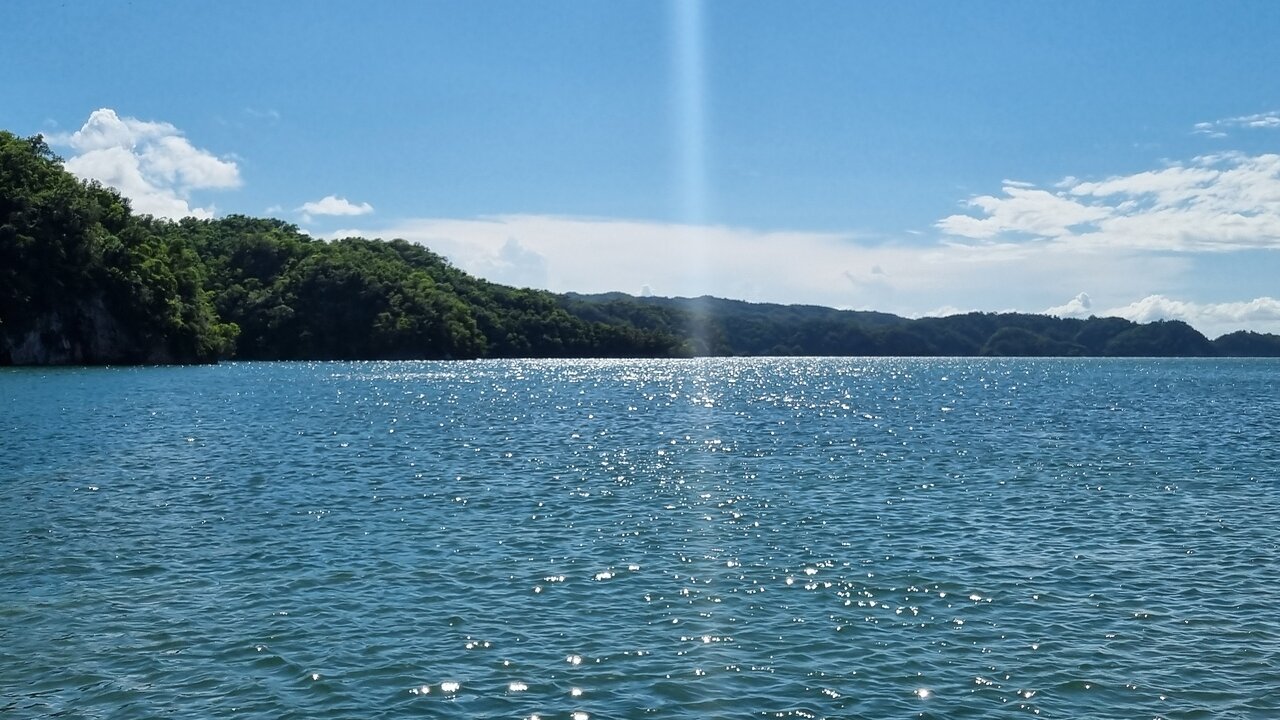
The Caribbean waters around Saona Island may appear calm and transparent from a beach or boat. Beneath the surface, however, seawater is constantly moving in complex ways. Some movements are smooth and organized, while others are irregular, rapidly changing and difficult to predict.
This irregular motion is known as ocean turbulence.
Ocean turbulence plays an important role in transferring energy and mixing water. It helps move heat, salt, nutrients and other substances between different parts of the ocean. It also influences coastal water conditions and the physical environment experienced by marine organisms.
Understanding turbulence provides a deeper look at the physical oceanography of the Caribbean Sea and the underwater processes associated with Saona Island.
1. What Is Ocean Turbulence?
Ocean turbulence is a form of fluid motion characterized by irregular fluctuations in water velocity and direction.
Instead of moving in a perfectly smooth path, water moves through interacting swirls, fluctuations and changing flow structures. These motions occur across a wide range of sizes and timescales.
Turbulence can develop when energy enters the water through processes such as:
- Wind stress at the ocean surface
- Breaking surface waves
- Differences in water velocity between neighboring layers
- Tidal flow around coastal features
- Currents interacting with underwater topography
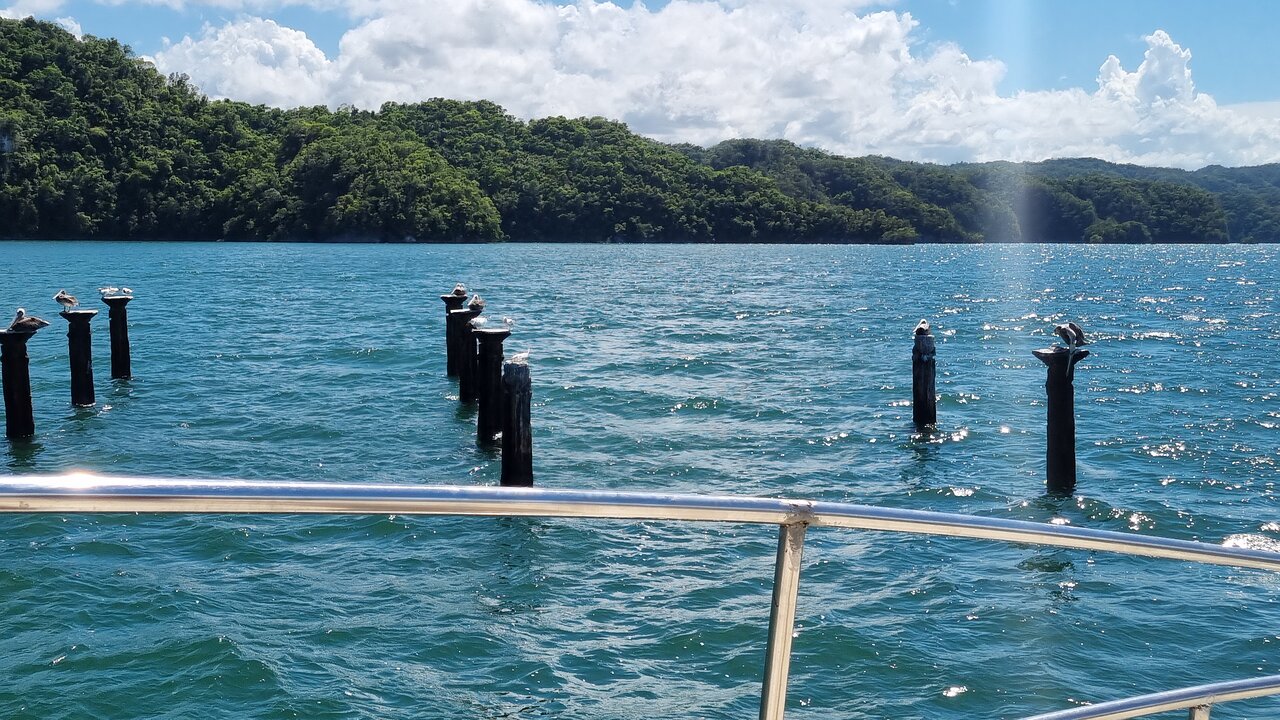
- Water moving past submerged structures
Turbulence is not the same as a single large ocean current or a long-lived rotating ocean eddy. It describes the irregular motion and energy transfers that occur within flowing water.
2. How Does Ocean Turbulence Develop?
Turbulence can form through several physical mechanisms.
Wind-driven motion
Wind transfers momentum from the atmosphere into the ocean. This creates surface currents and contributes to turbulent motion in the upper water column.
Strong winds can increase surface mixing, although the resulting turbulence also depends on waves, water density and existing circulation.
Velocity shear
Velocity shear occurs when neighboring layers of water move at different speeds or in different directions.
For example, a faster-moving upper layer may pass over a slower-moving lower layer. The difference in velocity can create instabilities that develop into turbulent motion.
Breaking waves
When waves break, their organized motion becomes more irregular. Wave energy is transferred into turbulence, bubbles and other forms of water movement.
Breaking waves can therefore contribute to mixing near beaches and in shallow coastal environments.
Tidal and topographic interactions
Tidal currents moving around reefs, channels, ridges and other underwater features can create complex flow patterns.
These interactions may generate shear and turbulence. Their intensity depends on local water depth, current speed and underwater geometry.
3. What Is Turbulent Kinetic Energy?
Turbulent kinetic energy, commonly abbreviated as TKE, describes the kinetic energy associated with fluctuating water motion.
In simple terms, it represents energy contained in the irregular velocity variations around the average flow.
A common expression for turbulent kinetic energy per unit mass is:
TKE = 1/2 (u'² + v'² + w'²)
Where:
- u' represents the fluctuating east-west velocity component
- v' represents the fluctuating north-south velocity component
- w' represents the fluctuating vertical velocity component
The expression shows that turbulence involves motion in three dimensions.
TKE is useful because it allows oceanographers to describe and compare the energy contained in turbulent fluctuations.
However, turbulent kinetic energy alone does not describe every aspect of mixing. Scientists also investigate how quickly energy is transferred and dissipated.
4. What Is Turbulent Energy Dissipation?
Turbulent energy dissipation describes the conversion of turbulent kinetic energy into internal energy through the action of viscosity at very small scales.
Large turbulent motions can transfer energy toward smaller and smaller motions. Eventually, viscosity becomes important and the kinetic energy is dissipated.
The turbulent kinetic energy dissipation rate is represented by the Greek letter epsilon (ε).
Its common units are:
- Watts per kilogram (W/kg)
- Square metres per cubic second (m²/s³)
A larger dissipation rate generally indicates more rapid conversion of turbulent kinetic energy into internal energy.
Dissipation is important because turbulence cannot continue indefinitely without energy input. Wind, waves, tides and larger-scale flows can supply energy, while viscosity gradually removes turbulent kinetic energy.
5. How Does Turbulence Mix Ocean Water?
One of the most important effects of turbulence is mixing.
Water may contain differences in temperature, salinity, dissolved substances and suspended material. Turbulent motion can move these properties between neighboring water parcels.
Important examples include:
Heat transport: Turbulence can redistribute heat between different depths and contribute to changes in upper-ocean temperature structure.
Salt transport: Mixing can reduce or redistribute salinity differences between water layers.
Nutrient transport: Turbulent mixing can help move dissolved nutrients between deeper water and surface layers.
Gas exchange within the water column: Turbulent motion can redistribute dissolved gases such as oxygen and carbon dioxide.
Particle movement: Turbulence can influence the movement and distribution of suspended particles.
The effectiveness of mixing depends on the strength of turbulence and the surrounding water-column structure.
6. Ocean Stratification and the Resistance to Mixing
Ocean water is often arranged in layers with different densities.
Density differences are influenced mainly by temperature and salinity. When lighter water lies above denser water, the water column can become stratified.
Stratification can resist vertical movement because a displaced water parcel experiences a restoring force.
This means turbulence may mix some layers more easily than others.
In strongly stratified water, turbulence can be limited or concentrated in particular locations. Where shear becomes strong enough, however, instabilities can develop and generate mixing.
This is one reason why ocean turbulence is not distributed evenly throughout the water column.
7. Surface Turbulence and the Upper Ocean
The ocean surface is an important region for turbulence generation.
Wind, breaking waves and surface currents continuously transfer energy into the water.
The upper ocean may experience:
- Wind-driven turbulent motion
- Wave-related mixing
- Interactions between waves and currents
- Surface cooling or heating that changes water stability
- Vertical exchange within the mixed layer
The upper-ocean mixed layer is the region where water properties are relatively uniform compared with the water below it.
Turbulence helps maintain mixing within this layer, although its strength and depth vary with weather and ocean conditions.
Research shows that surface waves can play an important role in upper-ocean turbulence, in addition to wind stress and current shear.
8. Bottom Boundary Layer Turbulence
Turbulence also develops near the seabed.
When water flows over the ocean floor, friction slows the water closest to the boundary. This creates velocity gradients and can generate turbulent motion.
The region influenced by the seabed is known as the bottom boundary layer.
Its characteristics depend on:
- Current speed
- Water depth
- Seabed roughness
- Sand, gravel or other bottom material
- Underwater obstacles
- Wave and tidal conditions
Near the seabed, turbulence may influence the movement of suspended sediment and the exchange of substances between the water and sediment.
However, the exact effects depend on local conditions and cannot be assumed for every coastal location.
9. Turbulence, Marine Organisms and Ecosystem Processes
Ocean turbulence influences the physical environment in which marine organisms live.
Its effects can include:
Plankton distribution: Turbulence can change how microscopic organisms and particles are distributed through the water.
Nutrient availability: Vertical mixing may help transport nutrients toward sunlit waters where phytoplankton can use them.
Food encounters: Water movement can influence how small organisms encounter food particles and potential predators.
Larval transport: Turbulence can affect the short-term movement and distribution of marine larvae, although their final dispersal also depends on larger-scale circulation and behavior.
Suspended sediment: Near the seabed, turbulent motion can influence whether fine particles remain suspended or settle.
These effects can be complex. Weak, moderate and strong turbulence may have different consequences for different organisms and habitats.
10. Turbulence in Shallow Coastal Waters
Coastal waters are particularly interesting environments for studying turbulence because several physical processes can interact over relatively short distances.
Possible sources include:
- Breaking waves near shore
- Tidal flow through channels
- Currents passing over shallow topography
- Wind-driven circulation
- Interactions between water and the seabed
- Flow around submerged structures
In shallow water, surface and bottom influences may interact more strongly than they do in some deeper environments.
For Saona Island, these processes provide useful scientific context for understanding coastal water movement. However, identifying specific turbulence hotspots or assigning turbulence intensities to particular beaches, reefs or boat routes would require local measurements.
11. How Do Scientists Measure Ocean Turbulence?
Ocean turbulence is difficult to measure because it changes rapidly over small distances and short periods.
Researchers use specialized instruments to investigate its characteristics.
Microstructure shear probes
Shear probes measure small-scale fluctuations in water velocity. Their observations can be used to estimate turbulent energy dissipation rates.
Fast-response thermistors
These sensors measure rapid temperature fluctuations. Temperature microstructure can help researchers investigate turbulent mixing.
Acoustic Doppler Current Profilers
ADCP instruments use sound to estimate water velocity at different depths. They are useful for examining current structure and can support turbulence analysis when suitable measurements and methods are available.
Conductivity-temperature-depth instruments
CTD instruments measure conductivity, temperature and pressure. They help researchers understand water-column structure and the density differences that influence mixing.
Turbulence microstructure profilers
These systems are designed to collect high-resolution measurements as they move through the water column.
Numerical ocean models
Computer models can simulate turbulent processes and estimate mixing under different conditions. Models are especially useful when combined with real measurements.
No single instrument describes every aspect of turbulence. Researchers often combine several measurement methods to improve reliability.
12. What Is the Difference Between Turbulence and Ocean Currents?
Ocean currents describe the movement of water over a range of spatial and temporal scales. They can have relatively organized directions and patterns.
Turbulence describes irregular fluctuations within the flow.
For example, a coastal current may move generally along a shoreline while containing small turbulent fluctuations that move water in different directions.
The current describes the larger-scale flow, while turbulence helps explain the irregular motion and mixing occurring within it.
Both processes are important, but they are not interchangeable terms.
13. What Is the Difference Between Turbulence and Ocean Eddies?
An ocean eddy is a rotating or circulating water feature that can have a recognizable structure and a range of sizes.
Turbulence involves irregular fluctuations and energy transfers that may occur within or around larger flow structures.
Large eddies can transfer energy toward smaller scales, where turbulent processes become increasingly important.
However, not every turbulent fluctuation is a distinct ocean eddy, and not every rotating ocean feature should be described simply as turbulence.
Understanding this difference helps distinguish physical oceanography concepts that are often confused.
14. Can Ocean Turbulence Affect Coastal Water Clarity?
Turbulence can influence suspended particles, but its effect on water clarity is not always the same.
Near the seabed, stronger turbulent motion may keep fine sediment suspended in the water.
In other circumstances, mixing can redistribute particles through a larger water volume.
Water clarity also depends on phytoplankton, dissolved organic substances, sediment sources and other optical properties.
Therefore, turbulence alone cannot explain why a particular beach or coastal area appears clear or cloudy.
15. How Can Climate Change Influence Ocean Turbulence?
Climate change can alter the environmental conditions that influence ocean mixing.
Potential changes include:
- Changes in surface temperature and density structure
- Changes in upper-ocean stratification
- Shifts in wind and storm patterns
- Changes in ocean circulation
- Changes in sea-ice processes in polar regions
- Changes in the distribution of mixing and energy dissipation
The relationship is not simple. Stronger stratification may suppress some forms of vertical mixing, while changing winds, waves and circulation may alter turbulence in other locations.
Scientists therefore use long-term measurements and numerical models to investigate how turbulence responds to a changing climate.
16. Why Is Ocean Turbulence Research Important for Saona Island?
Saona Island is part of a coastal marine environment connected to the wider Caribbean Sea.
Understanding turbulence helps explain how water properties can be redistributed and how physical conditions may change over short distances.
This knowledge can support wider research into:
- Coastal ocean circulation
- Water-column mixing
- Sediment transport
- Marine habitat conditions
- Nutrient distribution
- Ocean heat exchange
- Coastal environmental monitoring
A dedicated local study would need to collect velocity, temperature, salinity and turbulence measurements at suitable locations and depths.
Without those observations, it would be inappropriate to claim that a particular beach, reef or channel around Saona Island has a specific turbulence level.
17. Why Should Visitors Care About an Invisible Ocean Process?
Visitors usually experience the ocean through visible features such as waves, beaches, boat movement and water color.
Turbulence is less obvious, but it helps explain why water does not behave like a motionless blue surface.
It contributes to the mixing and redistribution of substances throughout the marine environment.
Learning about it can make a boat trip, snorkeling excursion or coastal visit more interesting because it reveals the physical processes operating beneath the surface.
Visitors can also support healthy coastal environments by avoiding littering, respecting marine habitats and following responsible boating and snorkeling practices.
Frequently Asked Questions
1. What is ocean turbulence?
Ocean turbulence is irregular water motion involving fluctuating velocities and interacting flow structures across different scales.
2. What causes turbulence in the ocean?
Common causes include wind, breaking waves, velocity shear, tides and currents interacting with underwater topography.
3. What is turbulent kinetic energy?
Turbulent kinetic energy is the energy associated with irregular fluctuations in water velocity. It helps scientists describe the intensity of turbulent motion.
4. What does turbulent energy dissipation mean?
It describes the conversion of turbulent kinetic energy into internal energy through viscosity at very small scales.
5. Does turbulence help mix ocean water?
Yes. Turbulence can redistribute heat, salt, nutrients, dissolved gases and suspended particles.
6. Is turbulence the same as an ocean current?
No. A current describes larger-scale water movement, while turbulence describes irregular fluctuations within the flow.
7. Is turbulence the same as an ocean eddy?
No. Eddies are rotating or circulating water features. Turbulence involves irregular motions and energy transfers that can occur within larger-scale flows.
8. How do scientists measure ocean turbulence?
They use microstructure shear probes, fast-response thermistors, current profilers, CTD instruments and numerical models.
9. Can turbulence occur near beaches?
Yes. Breaking waves, tidal flow and interactions with the seabed can generate turbulent motion in shallow coastal waters.
10. Has ocean turbulence been measured at Saona Island?
This article does not establish a specific local turbulence measurement. Such a claim would require verified field observations from the surrounding waters.
Conclusion: Understanding the Ocean Beneath Saona Island
Ocean turbulence is an essential part of the physical processes that keep seawater moving and mixing.
Wind, waves, tides and velocity differences can generate irregular motion. That motion transfers energy across different scales and helps redistribute heat, salt, nutrients and particles.
Although turbulence is difficult to observe directly during an ordinary visit to Saona Island, it is important for understanding the wider Caribbean marine environment.
By studying turbulent kinetic energy, energy dissipation and ocean mixing, scientists gain a more detailed picture of how the sea works.
The ocean is not simply a body of blue water. It is a dynamic system filled with motion at scales both large and incredibly small.

Local explorer & expert guide in El Limón Waterfall.